

Interview Cooperation:
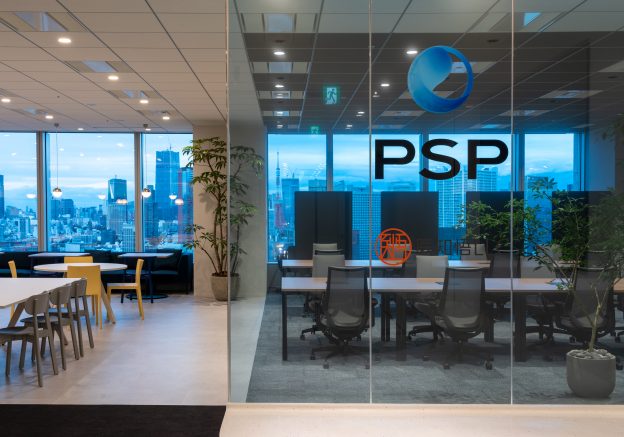
Mr. Shiraishi, Development Management Section, 2nd Development Department, Technical Headquarters, PSP Corporation
Overview of PSP Corporation
・Established: 1989
・Capital: 1.1 billion yen
・Business Description:
Development and provision of medical imaging systems and business support systems in the radiology field.
Development and provision of cloud services related to healthcare and AI development support platforms.
Development and provision of PHR services.
(
https://www.psp.co.jp/
)
Services Utilized
・Translation of Instruction Manuals – Japanese to English
Project Background and Challenges
――HS: First, in May 2024, you consulted us about the English translation of the operation manual for the "Medical Image Reference System." Could you please tell us about the background and challenges of the project you entrusted to our company?
Mr. Shiraishi: Our products were originally mainly for the domestic market, but some products had overseas demand, and we handled the creation of manuals for overseas markets on an as-needed basis.
The trigger was the company policy to expand other products overseas as well, which suddenly increased the number of products requiring English translation.
For parts added due to product updates, we handled them with in-house native English employees and Google Translate, but managing the additional parts became a heavy burden.
The volume became too much to handle internally, and the company adopted a policy to proceed on the premise of outsourcing.
Suddenly, there arose a need to translate a large number of Japanese manuals into English, and the first challenge was selecting a contractor.
Reasons for Choosing Human Science
――HS: Could you tell us how you found our company, how you compared us with other companies, and how you proceeded?
Mr. Shiraishi: At first, we narrowed down candidates through a web search.
At the same time, when we checked internal records, we found a history of having requested services from Human Science nearly ten years ago, and we were able to confirm with those involved that "we have asked them before."
Ultimately, we obtained competitive quotes for the same manual from your company and one other company.
Since we were still in the exploratory stage, we initially placed orders with companies that offered lower costs.
――HS: Could you tell us about the background that led to switching to our company afterwards?
Mr. Shiraishi: Because the volume was large and existing parts and additions were mixed together, it was difficult to replace images and organize new translation sections.
Due to communication gaps, deadlines were pushed back, rework requests occurred, and additional costs accumulated as out-of-scope work.
The translation itself was not problematic, but there were lingering dissatisfactions with handling Word and the layout, specifically in the "manual creation" part.
Therefore, we decided to switch to Human Science starting with the next product.
――HS: Please tell us about the differences you felt after the switch and the final reasons for choosing us.
Mr. Shiraishi: The estimates and explanations were thorough, and the administrative communication was smooth.
They pointed out things we hadn’t noticed, their response was quick, and the amount of rework decreased.
As a result, there were no accumulating additional costs, and we were satisfied with the overall cost.
We placed importance on whether the company excels at manual editing, so your company was a good fit.
――HS: Please share your impressions of our response and support system.
Mr. Shiraishi: You kindly explained your approach to estimates multiple times.
Handling of repeated expressions within the context was initially somewhat difficult to understand, but we were able to proceed with full understanding.
Implementation Effects and Evaluation of Human Science Co., Ltd.
――HS: How is the English version of the manual being used after delivery?
Mr. Shiraishi: It varies depending on the product, but in Southeast Asia, sales are made through distributors, and after the distributor representatives receive training using the manual, it is utilized at the sales destinations.
So far, there have been no major issues regarding the English text.
――HS: How have the operational changes and internal reactions been?
Mr. Shiraishi: The process from request to agreement has become standardized, and the starting point for consultations has become clear.
Even when requesting translations for multiple products, communications proceed smoothly without delays.
It has become easier to respond to requests from the internal technical departments, and we can now quickly incorporate sudden inquiries such as, "Can you translate this manual into English by ○ date?" into the process.
Future Prospects
――HS: Lastly, could you tell us about the operational challenges and future policies?
Mr. Shiraishi: We plan to gradually request translations for products that have not yet been requested.
The current challenge is determining the appropriate cycle for the timing of English translations of updates for each product.
From Human Science representatives
We are truly grateful that you have once again entrusted us with the task of "manual translation."
We strive to make the best proposals and estimates tailored to your requests by making full use of our past English translation assets.
We will continue to work hard to contribute to PSP’s overseas expansion and support Mr. Shiraishi’s operations.
 +81 35-321-3111[Tokyo Headquarters]
  Contact Us
 Request for Information
 TOP
TOP SITE MENU