



Introduction
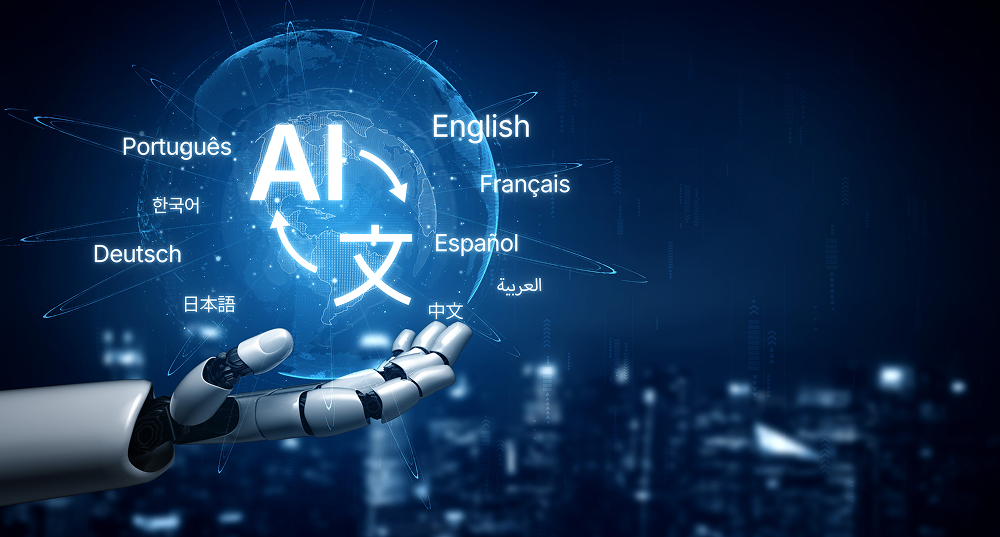
As the globalization of the gaming market accelerates, the importance of localization has never been greater. According to the latest data from Kadokawa ASCII Research Laboratories, the global game content market size is estimated to be 31.0042 trillion yen in 2024, and the domestic game content market size is estimated at 2.3961 trillion yen in the same year. Japan remains an important game market in terms of market size, and the quality and speed of localization in both domestic initiatives and overseas expansion determine business outcomes. However, game localization is not simply a "language conversion." It requires preserving the character's tone, avoiding cultural taboos, and producing translations that fit within UI constraints, all under tight deadlines. Due to this complexity, improving the efficiency of the translation workflow is a challenge for the entire industry.
This article systematically organizes the main challenges of localization in the gaming industry and explains how the AI translation tool "MTrans for Office" can solve these issues within the still-mainstream Excel-based workflow on site. Furthermore, it introduces, with concrete examples, how far MTrans for Office can meet the advanced requirement of differentiating tone translations by character.
>Related Blog: Localization Strategies in Japan: Differences from Translation and Keys to Success
- Table of Contents
-
- 1. Major Challenges in Game Localization
- 1.1 Tight Deadlines: Translation Bears the Brunt of Development Delays
- 1.2 Technical Challenges: UI Breakage and Encoding Issues
- 1.3 Differentiating Character Speech Styles: The Biggest Challenge in Game Translation
- 1.4 Challenges in the LQA (Language Quality Assurance) System
- 1.5 Large Volumes of Text and Context Dependence
- 2. Benefits of Introducing MTrans for Office into the Excel-Dominated Game Translation Workflow
- 2.1 One-click translation in Excel, no copy-pasting needed
- 2.2 Switch and compare multiple MT engines with one click
- 2.3 Unify proper nouns with glossary functionality
- 2.4 Style unification with automatic post-editing (automatic PE)
- 2.5 Character-specific translation using OpenAI custom prompts
- 2.6 Security and Group Management
- 2.7 Support for Trados / Phrase TMS / Crowdin / memoQ Users
- 3. Switching MT Engines / LLM Prompts by Character: The Capabilities of MTrans for Office
- 3.1 Defining Character-Specific Tones with MT Prompt Sets
- 3.2 Operation Flow on Excel
- 3.3 Simultaneous Execution and Comparison of Multiple Prompts
- 3.4 Combination with Automatic Post-Editing
- 3.5 Comparison with Other Tools: Why Prompt Switching on Excel Is Superior
- 4. The Future of Game Localization and the Role of AI Translation
- 4.1 AI Translation: From "Draft Translation" to "Practical Quality"
- 4.2 The Optimal Solution for AI Translation Utilizing Excel Workflows
- 5. Summary
1. Major Challenges in Game Localization

1.1 Tight Deadlines: Translation Bears the Brunt of Development Delays
Since game localization is positioned at the very end of the development process, upstream specification changes and development delays all lead to "shortened translation periods." Currently, simultaneous multilingual releases have become the norm, requiring multiple language teams to work in parallel under tight deadlines. For live-service titles, monthly event updates create a constant state of deadline pressure.
1.2 Technical Challenges: UI Breakage and Encoding Issues
There are still many cases where translated text is not displayed correctly from a technical standpoint. When translating from English to other languages, a 30-50% increase in character count is common, which can lead to UI layout breakage and text truncation. Especially for languages like German, where words tend to be longer, or right-to-left languages such as Arabic and Hebrew, simple translation replacement alone is insufficient, and a complete redesign of the screen layout may be necessary. Additionally, designs that embed text within images, insufficient font and character encoding support, and lack of adaptation to regional differences such as date formats and currency displays also contribute to lowering localization quality.
1.3 Differentiating Character Speech Styles: The Biggest Challenge in Game Translation
The most delicate and challenging task in game translation is differentiating the tone of speech for each character. Especially in Japanese localization, the choice of first-person pronouns ("ore," "watashi," "boku," "washi"), the use of sentence endings ("~daze," "~desuwa," "~ja"), and the adjustment of honorific levels shape the character's personality. Even among "men in their 20s," the tone of a "kind older brother" and a "mischievous young man" is completely different, and once a tone is decided, it must be consistently maintained until the end.
Conventional machine translation and AI translation have been known to struggle the most with maintaining consistent character tone. When translating text line by line in a spreadsheet without context, frequent issues arise such as "unstable first-person pronouns," "incorrect gender usage," and "a mix of polite and casual speech styles."
1.4 Challenges in the LQA (Language Quality Assurance) System
The LQA process is the "last line of defense" for quality, but issues such as resource shortages and misaligned perspectives have become problematic. While the localization team prioritizes "translations that resonate with local users," the LQA team tends to focus on "translations free of mistranslations and inconsistencies that do not carry refund risks." In the age of social media, even a single localization flaw going viral can pose a risk to the reputation of the entire region.
1.5 Large Volumes of Text and Context Dependence
A unique difficulty in game translation is the enormous volume of text and lack of context. It is still common for text to be managed in Excel spreadsheets, forcing translators to work line by line without grasping the overall context of the game. The simultaneous progress of development and translation tends to produce somewhat literal translations, and issues such as text not fitting on the screen also occur.
* You can scroll horizontally.
| Issue | [Main Content] | Impact on the Field |
|---|---|---|
| Delivery Deadlines | Development delays concentrate pressure on the translation process | Simultaneous multilingual support required in a short period |
| Technology | UI breakage, increased character count, encoding and RTL support | Display issues and reimplementation costs occur |
| Expression | Difficult to maintain character tone and worldview | Leads to decreased immersion and brand damage |
| Quality Assurance | Lack of LQA perspective, inconsistent notation, and cultural adaptation omissions | Increased risk of post-release fixes and rating decline |
| Operations | Processing large volumes of text without sufficient context | Mistranslations and inconsistencies are likely to occur |
2. Benefits of Introducing MTrans for Office into the Excel-Dominated Game Translation Workflow

In the game industry, workflows that manage translation target texts using Excel spreadsheets (including CSV) remain mainstream. This format, where StringID, source text, translated text, comments, and character limits are arranged in columns, facilitates data collaboration with development teams but makes the translation work itself very inefficient.

2.1 One-click translation in Excel, no copy-pasting needed
MTrans for Office operates as an add-in for Excel, eliminating the need for cumbersome tasks such as "opening translation software," "copying and pasting text," and "pasting back the results." It supports translation at the cell level, entire rows, entire columns, entire sheets, and entire files. This significantly reduces the workload involved in translation tasks.
2.2 Switch and compare multiple MT engines with one click
Equipped with multiple translation engines including DeepL, Google, Microsoft, and OpenAI, it allows you to switch between them easily at any time. It also features the ability to display and compare translations from multiple engines simultaneously, enabling you to handle distinctions such as "DeepL is suitable for UI text" and "OpenAI (with custom prompts) produces natural character dialogue" entirely within Excel.
2.3 Unify proper nouns with glossary functionality
The most important aspect of game translation, "terminology consistency," is supported by MTrans Online's glossary feature. By pre-registering character names, place names, skill names, item names, and more, the translated terms remain consistent regardless of which MT engine is used. There is no limit to the number of glossaries that can be applied, allowing management at any level of granularity such as by project, character group, or content type.
2.4 Style unification with automatic post-editing (automatic PE)
The automatic post-editing feature, which automatically corrects translation results, allows you to unify the style of the translated text. By combining string replacement, regular expression replacement, and rewriting by OpenAI, the manual post-editing work is greatly reduced. Conversions such as from polite form to plain form, unification of full-width and half-width characters, and punctuation standardization can also be processed automatically, enabling fine adjustments to match the tone of the game.
2.5 Character-specific translation using OpenAI custom prompts
With the OpenAI engine in MTrans for Office, you can customize translation instructions as MT prompt sets. You can prepare prompts in advance, such as "This character is an elderly sage who uses 'Washi' as the first-person pronoun and ends sentences with '~ja'," and translate by switching according to the character. Additionally, it features the ability to run multiple prompts simultaneously and compare the results, allowing you to select the optimal translation.
2.6 Security and Group Management
Since the connection is via API, translation data is not used for training, and it also supports SSO (Single Sign-On) and IP address restrictions. Additionally, there is a group management feature that allows glossaries and custom prompts to be managed by game or team, enabling confidential data to be shared only with team members.
* You can scroll horizontally.
| Perspective | Traditional Excel-Centered Operation | After Introducing MTrans for Office |
|---|---|---|
| Work Method | Copy & Paste and Switching Between External Tools Occur | Translation Is Completed Within Excel, Minimizing Task Switching |
| Selecting MT engine Function | Troublesome to Separate Usage by Purpose | Can quickly switch and compare multiple MT/LLMs |
| Terminology consistency | Tends to be managed manually | Easy to unify proper nouns by applying glossaries |
| Style consistency | High correction burden in later stages | Easy to unify notation and writing style with automatic post-editing |
| Team Operation | Settings Sharing Tends to Be Dispersed | Glossary and Prompts Are Easy to Manage Centrally |
2.7 Support for Trados / Phrase TMS / Crowdin / memoQ Users
The MTrans series also supports translation workflows other than Excel. Centered on MTrans Online, it provides plugins/integration functions for the following translation support tools as well.
* You can scroll horizontally.
| Product Name | Supported Tools | Main Features |
|---|---|---|
| MTrans for Trados | Trados Studio | Supports terminology application, automatic PE, MT custom prompts, and automatic correction of fuzzy matches in translation memory |
| MTrans for Phrase TMS | Phrase TMS | Supports terminology application, automatic PE, and MT custom prompts |
| MTrans for Crowdin | Crowdin | Supports terminology application, automatic PE, and MT custom prompts |
| MTrans for memoQ | memoQ | Supports terminology application, automatic PE, and MT custom prompts |
All products allow centralized management of glossaries, MT custom prompts, and automatic post-editing condition sets on a web page called MTrans Online, enabling consistent translation quality regardless of the tool used. Even translation teams already using Trados or Phrase TMS can directly share and utilize glossaries and prompt settings, allowing Excel-based teams and CAT tool-based teams to proceed with translation work under the same quality standards.
3. Switching MT Engines / LLM Prompts by Character: The Capabilities of MTrans for Office

In game translation, to render different tones for each character, a system that allows easy switching of MT engines or LLM prompts—such as "Prompt A for Character A, Prompt B for Character B"—is essential.
3.1 Defining Character-Specific Tones with MT Prompt Sets
In MTrans for Office, when using the OpenAI engine, you can create multiple custom prompts (MT prompt sets) and centrally manage them on MTrans Online. By simply switching prompts during translation, you can differentiate the tone of translation according to each character.
Example: Differentiating RPG Character Translations
* You can scroll horizontally.
| Character | Example of MT Prompt Settings | Translation Result Image |
|---|---|---|
| In the Style of the Old Sage Gandalf | "Use first-person pronoun 'Washi', sentence endings '~ja' and '~nou', translate in an archaic and dignified tone." | "Do not underestimate my power. The darkness is closing in right here." |
| Energetic Young Male Protagonist | "Use first-person pronoun 'Ore', sentence endings '~daze' and '~daro', translate in an energetic and positive tone." | "Leave it to me! I'll definitely find a way!" |
| Polite Female Knight | "Use first-person pronoun 'Watashi', employ honorific language, translate in a dignified and polite tone." | "Please leave it to me. I will definitely protect you." |
| Mysterious Witch | "Use 'Atashi' as the first-person pronoun, sentence endings like '~kashira' and '~yo', and translate with a bewitching and mysterious tone." | "Do you need my magic? Hehe, what an interesting story." |
3.2 Operation Flow on Excel
The operation is extremely simple.
- Select the column or sheet of Character A's lines in Excel
- Switch the MT prompt to "Old Sage" in the add-in panel
- Execute sheet translation
- Next, select the column or sheet of Character B's lines
- Switch the MT prompt to "Young Protagonist"
- Execute sheet translation
This entire operation is completed within the Excel add-in panel. There is no need to change the CAT tool's project settings or split into separate files.
3.3 Simultaneous Execution and Comparison of Multiple Prompts
MTrans for Office allows you to run multiple MT prompts simultaneously and display the results side by side for comparison. For example, you can output translations using both the "Wise Old Sage" prompt and the "Young Protagonist" prompt for the same source text at the same time, enabling you to verify consistency with the character settings. This is especially useful in the early stages when you are experimenting and deciding on the tone of a new character.
3.4 Combination with Automatic Post-Editing
In addition to translation using MT prompts, combining automatic post-edit condition sets allows for automating fine-tuning after translation. For example, processes such as "unifying full-width brackets to half-width brackets," "converting full-width numbers to half-width," and "consistently replacing specific expressions" can be executed simultaneously with translation, enabling efficient handling of a large volume of dialogue.
3.5 Comparison with Other Tools: Why Prompt Switching on Excel Is Superior
Translation platforms such as Trados, Phrase TMS, Crowdin, and memoQ also allow customization of AI prompts and selection of MT engines. However, in these tools, prompt switching is generally done at the project settings, workflow unit, or file unit level, making the operation of "dynamically switching prompts for each line within the same file" cumbersome.
In the case of MTrans for Office, translators can switch prompts with a single click on the Excel add-in panel, making it possible to consecutively translate lines for multiple characters within a single spreadsheet.
4. The Future of Game Localization and the Role of AI Translation

4.1 AI Translation: From "Draft Translation" to "Practical Quality"
The accuracy of AI translation is rapidly improving, and it has reached practical quality especially for standardized content such as UI text and system messages. However, for narrative texts deeply rooted in character dialogue and the game world, post-editing by human translators remains indispensable. The important point is to position AI not as a "replacement for translators" but as a "tool that dramatically enhances translators' productivity."
4.2 The Optimal Solution for AI Translation Utilizing Excel Workflows
Considering the reality that many game development teams continue to manage text based on Excel, MTrans for Office, which allows you to benefit from AI translation without changing existing workflows, is the easiest solution to introduce in the field of game localization. Comparison of multiple engines, character-specific translation differentiation using custom prompts, unification of proper nouns through glossaries, and style unification through automatic post-editing. By providing these functions as an Excel add-in, translators can immediately improve productivity without incurring the learning cost of new tools.
Furthermore, since terminology glossaries and prompt settings of MTrans Online can be shared with teams using Trados, Phrase TMS, Crowdin, and memoQ, it enables unified quality standards across the entire translation team.
5. Summary
Localization in the game industry faces multidimensional challenges such as deadlines, quality, cultural adaptation, and character expression. Utilizing AI translation tools is an effective solution to these challenges, but the most important factor when selecting tools is their compatibility with the on-site workflow.
In Excel-based game translation workflows, MTrans for Office demonstrates strengths in the following areas.
・Seamless translation within Excel: No copy-pasting required, layout preserved
・Freely switch and compare multiple MT engines
・Custom prompts enable tone differentiation by character
・Simultaneous execution and comparison of multiple prompts to select the optimal translation
・Terminology glossary + automatic post-editing to ensure quality
・Plugins available for Trados / Phrase TMS / Crowdin / memoQ, enabling unified quality standards across the entire team
・Low cost and low learning curve for immediate implementation
Experience firsthand how much your game translation workflow can change with the 14-day free trial.





















 Return to the top of the page

 +81 35-321-3111[Tokyo Headquarters]
  Contact Us
 Request for Information