


- Table of Contents
1. What is AI Translation (Machine Translation)?

AI translation is a system that utilizes AI (artificial intelligence) technology to automatically translate from one language to another. It was traditionally called automatic translation or machine translation, but in recent years, with the advancement and application of AI technology, the term AI translation has become common. At the core of this technology are "neural networks" and "deep learning," which have dramatically improved translation accuracy. Nowadays, AI translation services such as Google Translate, DeepL, and ChatGPT are widely used in business and daily life.
2. AI Translation (Machine Translation) Mechanisms
AI Translation (Machine Translation) mainly consists of three methods: rule-based machine translation, statistical machine translation, and neural machine translation.
In rule-based translation methods, humans need to create translation rules based on dictionaries and grammar, and this process is complex and difficult to update. Additionally, this method had low translation accuracy and could only translate formulaic sentences.
On the other hand, in statistical machine translation, computers learn rules. By reading a large number of pairs of original texts and their translations (e.g., 1 million sentences), they learn the correspondence between words and phrases in the original text and the translation from the data (corpus), making it relatively easy to handle new phrases. However, translation between languages with different grammar, such as English and Japanese, is difficult, and the translation accuracy was not practical.
In addition, there are hybrid translation methods that combine rule-based and statistical machine translation, as well as example-based translation techniques that extract similar parts from existing source and translated text pairs to utilize in translation. These methods have improved translation accuracy compared to traditional rule-based machine translation.
Neural translation, like statistical machine translation, learns by ingesting a large number of pairs of original texts and their translations. However, by using neural networks and deep learning, which are types of machine learning, it can utilize more information for translation. As a result, translation accuracy has significantly improved, allowing for more natural and fluent translations. The emergence of neural machine translation has brought attention to machine translation, which is now widely used in daily life and work.
For details on these translation methods, please see the page below.
How Machine Translation Works - Literal Translation, Free Translation, and Neural Translation?
3. Benefits of Using AI Translation (Machine Translation)

Translation systems utilizing the latest AI technology have made it possible to achieve significantly higher quality translations compared to traditional machine translation. In particular, translation engines that leverage neural networks can understand context and generate more natural translations. Another major benefit is the substantial reduction in translation time. Even large volumes of documents that would take several days to translate manually can be completed in minutes by using AI translation.
Furthermore, cost reduction in translation work is another significant advantage. Compared to requesting services from traditional translation companies, AI translation can be used at a dramatically lower cost. Additionally, many AI translation services support over 100 languages, helping to lower language barriers in global business. For example, it can be utilized in various situations such as multilingual websites, manual translations, and business communication with overseas partners.
However, it is necessary to understand that AI translation also has its limitations. In particular, the translation of documents requiring high expertise and accuracy, such as legal documents and contracts, requires checking and corrections by specialists. AI translation is not intended to completely replace human translators but should be used as a tool to streamline and support translation work.
A drawback of machine translation is the issue of accuracy. Especially for texts that heavily depend on context, mistranslations are more likely to occur. Therefore, it is not recommended to use machine-translated documents as they are, and human verification is essential. For particularly important documents such as contracts, it is advisable to outsource to specialized translation companies.
4. How to Utilize AI Translation
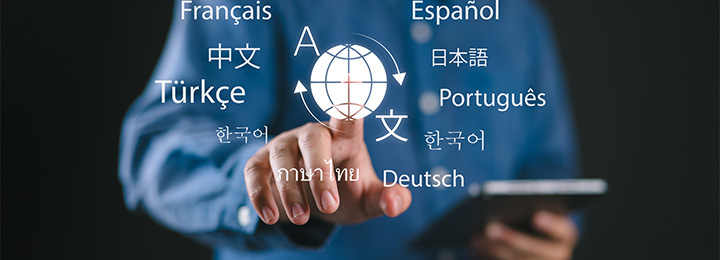
Using AI translation can streamline the translation of documents and materials in business settings. For example, it can be utilized for translating various documents such as contracts, proposals, manuals, and presentation materials. It is particularly effective when there is a need to translate a large volume of documents in a short time or for translating standardized documents. Additionally, it can significantly reduce the working time when used by translators as a preliminary translation.
Communication with foreign guests is widely utilized, particularly in the tourism and railway industries. For example, it is invaluable in situations requiring real-time interpretation, such as customer service at hotel front desks, explanations at tourist information centers, and guidance at train stations. By using smartphones and tablets, conversations can be translated instantly, enabling smooth communication that transcends language barriers.
In internal and external business global communication, it plays an important role in international business development. In web meetings such as discussions with overseas offices and webinars conducted in foreign languages, it is possible to transcribe and translate speech into subtitles in real time. It is also effective for exchanging emails with overseas business partners and multilingualizing internal documents. This reduces language barriers in global business and enables smooth communication.
[Related Links]
How to streamline translation tasks? Introducing the advantages and disadvantages of representative tools
[Updated for 2025!] 5 AI Translation Tools - A Comparison of Features!
5. AI Translation Security
Depending on the AI translation service, the data you input may be reused for service improvement and incorporated into the translation engine. As a result, there is a possibility that confidential information may be leaked to external users. As a preventive measure, please check the terms of use of the AI translation service you are using and choose services or plans that do not allow data reuse. When selecting an AI translation service for business use, carefully consider which services have high confidentiality.
[Related Link]
Is Confidentiality Maintained with DeepL Translations? What About Security?
6. Summary
AI translation (machine translation) is a system that automatically translates languages using AI technology. Especially with the advancement of neural networks and deep learning, accuracy has improved, and services like Google Translate and DeepL are widely used. It supports global business by shortening translation time, reducing costs, and handling multiple languages, but human verification is necessary for specialized content such as legal documents. Also, please be aware that using AI translation services may pose a risk of confidential information leakage.
Human Science offers an automatic translation software called "MTrans for Office" that utilizes translation engines from DeepL, Google, Microsoft, and OpenAI. OpenAI can not only translate but also generate, rewrite, and proofread text depending on the prompt, supporting business efficiency and multilingual capabilities. MTrans for Office also offers a 14-day free trial. Please feel free to contact us.
Features of MTrans for Office
- ① Unlimited number of file translations and glossary integration for a fixed fee
- ② One-click translation from Office products!
- ③ API connection ensures security
・For customers who want further enhancement, we also offer SSO, IP restrictions, and more. - ④ Support in Japanese by Japanese companies
・Support for security check sheets is also available
・Payment via bank transfer is available
MTrans for Office is an easy-to-use translation software for Office.











 Return to the top of the page
 +81 35-321-3111[Tokyo Headquarters]
  Contact Us
 Request for Information