




- Table of Contents
-
- 1. What Are the Differences Between Legal Translation and Language Translation?
- 1.1 What Is Legal Translation?
- 1.2 Differences from General Language Translation
- 2. Fields Covered by Legal Translation
- 2.1 Legal Translation (Public Regulations and Litigation Support)
- 2.2 Legal Translation (Business Transactions and Corporate Legal Affairs)
- 2.3 Internal Control Translation (Governance and Ethical Regulations)
- 3. Key Points for Selecting Outsourcing Partners for Legal Translation
- 4. Can Legal Translation Be Handled by AI Translation?
- 4.1 Advantages
- 4.2 Challenges
- 5. For AI Translation, "MTrans for Office" is Recommended
- 6. Summary
In global business, the translation of contracts, internal regulations, and litigation-related documents is a crucial task that establishes a company's rights and obligations. Legal documents require a high level of expertise, and mistranslations can lead directly to legal risks, necessitating careful handling. This article explains the fundamental characteristics of legal translation, criteria for selecting outsourcing partners, and points to consider when implementing AI translation in practical use.
1. What Are the Differences Between Legal Translation and Language Translation?

This section provides a detailed explanation from the overview of legal (legal) translation to the differences from general language translation.
1.1 What Is Legal Translation?
Legal translation refers to the translation of documents that have legal effect, such as laws, ordinances, contracts, judgments, or internal regulations. Its essential purpose is not merely the transmission of information but the proper transfer of legal effect and the clarification of rights and obligations. Therefore, specialized translation departments and translation companies are required to maintain the legal weight of the original wording while meeting the practical demands for speed through advanced operations.
1.2 Differences from General Language Translation
Legal translation differs significantly in the skills and perspectives required compared to general language translation, which targets everyday business communication.
・Translation of legal knowledge and specialized terminology
Legal terms often have specific legal definitions that differ from everyday language. For example, expressions such as the Japanese terms "immediately," "promptly," and "without delay," or the English terms "shall," "may," and "must," need to be translated precisely based on their legal grounds.
・Knowledge of Foreign Legal Systems is Required
It is essential to perform conceptual substitutions (legal transposition) that take into account the differences in legal systems between the source and target languages. For example, in common law jurisdictions such as the UK and the US, the concept of "Consideration" has no direct equivalent in Japanese civil law. A careless literal translation in such cases may cause serious misunderstandings related to the requirements for contract formation.
・Strict Accuracy
In legal documents, the interpretation can differ based on the placement of particles or punctuation marks. For example, if the limitation clause on damages is mistranslated from "Except for gross negligence" to "Except for negligence," it would result in bearing liability even for slight negligence that should originally be exempted, directly leading to financial harm.
2. Fields Covered by Legal Translation

The fields covered by legal translation are introduced in three main categories.
2.1 Legal Translation (Public Regulations and Litigation Support)
This is the area that requires the strictest accuracy, related to national laws and judicial procedures.
・Scope: Laws, ordinances, litigation and arbitration-related documents, etc.
・Characteristics: Since judgments and evidence materials are directly linked to evidentiary value, precise translation based on an official style is indispensable to ensure there are no discrepancies in the interpretation of every single word.
2.2 Legal Translation (Business Transactions and Corporate Legal Affairs)
Refers to legal documents that arise routinely in the course of a company's economic activities and organizational management.
・Scope: Contracts, corporate legal affairs, finance and investor relations (IR), M&A related documents, etc.
・Characteristics: The main objective is to clarify the rights and obligations in transactions. Especially in M&A and financial practices, a combination of advanced practical knowledge and swift processing ability is required.
2.3 Internal Control Translation (Governance and Ethical Regulations)
These are documents aimed at maintaining organizational governance and ensuring thorough compliance.
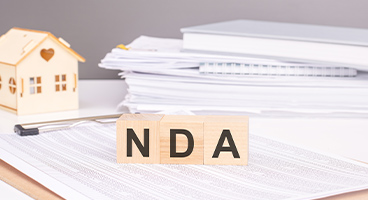
・Target: Compliance regulations, confidentiality agreements (NDA), etc.
・Features: While ensuring accuracy, it is important to use clear and simple expressions so that employees from diverse cultural backgrounds can correctly understand the common standards.
3. Key Points for Selecting Outsourcing Partners for Legal Translation

The key points for selecting an outsourcing partner for legal translation are as follows. A multifaceted perspective is necessary to ensure not only cost efficiency but also quality and reliability.
・Translation track record in the relevant field
Check whether the provider has deep expertise not only in the broad category of "law" but also in specific fields your company wants to commission, such as intellectual property, labor law, M&A, and finance.
・Supported Languages and Fields
We evaluate whether expansion into multiple languages beyond the main ones is possible in line with global deployment, and whether translators familiar with the legal systems of those countries are on staff.
・Check System
Confirm whether the process includes proofreading by legal specialists or a legal review to verify legal consistency, rather than just self-checking by the translator alone.
・Security System
Contracts and M&A documents contain highly confidential information. Confirm whether there is a thorough system in place to prevent information leaks, such as the acquisition status of ISO 27001 (ISMS) and the security level of the translation platform.
・Supported Formats (Word, PDF, Contract Templates, etc.)
We evaluate whether flexible, practical対応 is possible, such as maintaining the unique layout of contracts, highly accurate reproduction from PDFs, and integration into specific in-house templates.
・Integration with Glossaries
We verify whether there is a system in place that can properly reflect and manage past translation assets (translation memories) and company-specific glossaries.
・Certification Compliance
We confirm compliance with objective quality standards, such as whether the international translation quality standard "ISO 17100" has been obtained.
・Deadlines and Emergency Response
How flexibly and quickly a provider can respond to highly urgent cases, such as contracts with imminent signing deadlines or urgent litigation documents, is also an important practical criterion for decision-making.
4. Can Legal Translation Be Handled by AI Translation?

To what extent can AI translation be utilized in the practice of legal and law-related translation? Here, we organize the benefits and challenges of using AI.
●Benefits
・Leads to time and cost reduction through improved speed
The greatest advantage of AI translation lies in its overwhelming processing speed. It can translate vast amounts of documents in a short time, enabling significant time savings and cost reduction in initial screenings during M&A due diligence and in grasping the framework of standardized contracts.
●Challenges
・Cannot Understand Legal Nuances
Since AI generates translations based on statistical inference, it is difficult to fully grasp the legislative intent behind the provisions or the subtle nuances that influence interpretation.
・Contextual errors, misinterpretation of legal terms, and incorrect conversion of proper names
There are frequent cases where highly context-dependent technical terms are translated as common words, or where the logical relationships before and after are misunderstood, resulting in output with the opposite legal meaning.
・Concerns about information leakage when using the cloud
In environments with insufficient security, such as free translation services, highly confidential legal documents may be used to improve AI models shared by all users, posing a risk of information leakage to third parties.
Based on these advantages and challenges, it is recommended to establish a robust "post-editing system" that combines the speed of AI translation with the accuracy of experts. Creating efficient draft translations with AI and having legal professionals ensure the final legal consistency in a hybrid operation is the practical solution that balances the three elements of speed, cost, and accuracy.
5. For AI Translation, "MTrans for Office" is Recommended

There is an AI translation tool called "MTrans for Office" that allows easy translation of various documents, including legal translations. MTrans for Office is an AI translation add-in integrated into Microsoft Office's Word, Excel, and PowerPoint, making it a convenient tool that can translate everyday Office documents in their original format. It employs neural machine translation technology to provide natural and accurate translations that consider context. Even for highly specialized documents such as legal texts, translation work can proceed within the Office files themselves, allowing AI translation to be introduced without significantly changing existing workflows.
・Direct Translation within Office
No need to move files or copy & paste. You can perform translation tasks directly from the familiar interface, making effective use of experts' time.
・Selectable from Four Translation Engines
You can choose the most suitable engine according to your purpose and field of expertise from DeepL, Google, Microsoft, and ChatGPT (OpenAI).
・Pre-registration of Proper Nouns
By pre-registering company names, product names, and technical terms, it prevents mistranslations of specialized content and ensures accurate translations.
・High Security
It allows secure translation of highly confidential documents, making it ideal for important materials handled by in-house experts.
6. Summary
The quality of legal and law-related translations is directly linked to a company's legal risk management. In legal documents where the interpretation of every single word is crucial, appropriately combining technology with human expertise is the key to smoothly advancing global business operations.
For routine information gathering within the company and tasks that require rapid understanding of content, the use of the secure AI translation tool "MTrans for Office" is effective. It streamlines operations while maintaining confidentiality and supports speedy decision-making. On the other hand, for contract conclusion and litigation responses where legal consistency is strictly required, we recommend combining the convenience of AI with expert-refined "post-editing services" and "professional translation services" handled by experienced translators from the start.
At Human Science, we offer flexible solutions tailored to your company's needs, ranging from providing a secure AI translation environment, "MTrans for Office," to post-editing services by professional translators. MTrans for Office supports translation engines such as DeepL, Google, Microsoft, and ChatGPT. ChatGPT can be used not only as a translation engine but also for text generation, rewriting, and proofreading depending on the prompts. We also offer a 14-day free trial. Please feel free to contact us.
Features of MTrans for Office
① Unlimited number of translatable files and glossaries with a flat-rate system
② Translate with one click from Office products!
③ Security is assured with API connections
・We also offer SSO, IP restrictions, and more for customers who want further enhancements
④ Support in Japanese by Japanese Companies
・Support for security check sheets is also available
・Payment via bank transfer is available
MTrans for Office is an easy-to-use translation software for Office.

















 Return to the top of the page
 +81 35-321-3111[Tokyo Headquarters]
  Contact Us
 Request for Information