


- Table of Contents
- 1. In Physical AI, Translation Directly Impacts Safety
- 2. The Quality of Japanese-English Translation Supporting Overseas Expansion
- 3. English-Japanese Translation for Proper Integration of Overseas Technology
- 4. The Role of Translation in International Joint Development
- 5. Main Documents Requiring Translation in the Physical AI Field
- 6. Areas Where AI Translation Alone Is Insufficient
- 7. Recommended Translation Workflow
- 7-1. Classify Document Usage and Risks
- 7-2. Prepare Glossaries and Style Guides
- 7-3. Utilize AI Translation as a Draft
- 7-4. Incorporate Reviews by Translators with Expertise
- 7-5. Secure a Confirmation Route with Technical Personnel
- 7-6. Accumulate and Utilize Translation Assets
- 8. Documents for Which Utilizing Human Translation Services Is Effective
- 9. Summary
- Information on Translation Services from Human Science
Robots, autonomous driving, industrial equipment, logistics automation, medical and nursing care robots. As the field called "Physical AI," where AI operates in the real world, rapidly expands, the role of English-Japanese and Japanese-English translation is also undergoing significant changes.
Physical AI is a field where multiple domains such as AI, robotics, sensors, control, software, manufacturing sites, and safety standards are intricately intertwined. In terms of translation as well, there are increasing situations where simple language substitution is no longer sufficient. Accurately conveying technical information, ensuring that the content is finalized in a state that can be safely operated on-site, and building a shared understanding with overseas customers and development partners—these roles that translation plays can be said to be growing heavier year by year.
For those responsible for translation and localization within a company, decisions such as "which documents should be translated at what quality level" and "to what extent AI translation should be utilized and when to switch to human translation or expert review" are likely required on a daily basis.
This article organizes the importance of translation in the field of Physical AI from four perspectives: safety, overseas expansion, technology adoption, and international joint development, and then explains a translation workflow that translation personnel can easily incorporate into their work, as well as key points for utilizing human translation services.
1. In Physical AI, Translation Directly Impacts Safety
The greatest characteristic of Physical AI is that AI decisions are directly reflected in the real world as the physical actions of robots and machines.
Considering this characteristic, it is easy to imagine the risks of ambiguity remaining in the translation of documents such as operation manuals, installation instructions, maintenance manuals, safety warnings, error messages, stop conditions, and risk assessments. Even a slight inaccuracy in the translation could lead to misunderstandings or operational errors on site.
Let's consider this concretely. The robot's payload capacity, operating range, safety distance, emergency stop conditions, restart procedures, and maintenance precautions—slight differences in expression can influence the operator's judgment. In the digital AI domain, translation errors might only lead to misunderstandings of information. However, in the case of physical AI, mistranslations can affect the machine's operation, the working environment, and even the safety of the operator.
In other words, what is required in this field is not a translation that is "generally understandable in meaning," but a translation that is "unambiguous and can be used directly on site." As a translator, it is essential to always keep in mind not only whether the translation reads naturally in Japanese but also whether "the personnel on site can read this text and make correct judgments and take appropriate actions."
2. The Quality of Japanese-English Translation Supporting Overseas Expansion
Japan is home to many companies with global competitiveness in fields such as industrial robots, FA equipment, sensors, precision machinery, and manufacturing equipment. With the advancement of Physical AI, overseas interest in these technologies has been increasing even more.
The key here is the quality of Japanese-to-English translation. Product catalogs, technical specifications, proposals, case studies, exhibition materials, websites, and contract-related documents are all important touchpoints for conveying your company's technological capabilities and reliability to overseas customers.
In particular, technical specifications and manuals are highly influential documents. If they contain ambiguous English translations or unnatural expressions, there is a risk that overseas customers may not correctly understand the product's performance or usage conditions. The same applies to sales materials, where the choice of technical terms and the accuracy of explanations can greatly affect how your technological capabilities are perceived.
For companies related to Physical AI, translation is the very business foundation that supports negotiations with overseas customers, implementation support, maintenance, and joint development. Rather than positioning it as a supplementary task, it is important to regard it as part of the business strategy.
3. English-Japanese Translation for Proper Integration of Overseas Technology
In the field of Physical AI, it is common not only to expand one’s own technology overseas but also to incorporate overseas-originated technologies and information within the company. The technologies provided in English technical documents cover a wide range, including AI models, robot OS, semiconductors, sensors, cameras, LiDAR, simulation environments, cloud infrastructure, and development tools.
An indispensable part of introducing such technologies is the accurate understanding of API specifications, SDK documents, academic papers, white papers, standards documents, vendor materials, and the like. Among these, details such as control conditions, limitations, license terms, warranty scope, safety requirements, and error handling can influence development policies and decisions on whether or not to implement, due to subtle nuances.
If English-to-Japanese translations of insufficient quality are distributed within the company, there is a risk that development teams and on-site personnel will proceed based on incorrect assumptions. As a translator, it is important to be aware, even for materials shared internally, whether "this translation might be used for decision-making or design judgments."
Reference Blog: Points to Note When Translating Technical Documents into English with AI Translation | Tips for Natural English
4. The Role of Translation in International Joint Development
Physical AI is a field that is difficult to complete by a single company alone. Cases where many stakeholders such as AI development companies, robot manufacturers, component manufacturers, software vendors, universities and research institutions, system integrators, and end users collaborate across national and language barriers are increasing.
In such projects, the success or failure hinges on whether all stakeholders can accurately share the specifications, requirements, constraints, evaluation criteria, and scope of responsibility. If the quality of translation is insufficient, there is a risk that different interpretations will arise among stakeholders despite reading the same document.
In PoC (Proof of Concept), joint research, pre-mass production evaluation, and overseas deployment projects, ambiguity in translation directly leads to rework and additional costs. Translation is not merely the task of converting words; it plays the role of establishing the foundation of a common language in international projects.
5. Main Documents Requiring Translation in the Physical AI Field
In the field of Physical AI, a wide variety of documents are subject to translation.
First, there are product-related documents such as product catalogs, data sheets, technical specifications, design materials, operation manuals, maintenance manuals, safety procedures, warning labels, and risk assessments. In addition, technical and legal documents such as API specifications, SDK documents, research papers, technical reports, PoC materials, patents, contracts, NDAs, and SOWs are also included. Furthermore, when including proposals for overseas customers, exhibition materials, sales materials, websites, emails with overseas vendors, minutes, and meeting materials, the scope becomes quite extensive.
What should be noted here is that these documents each have different readers and purposes. It is not realistic to handle reference materials for internal review, specifications submitted to customers, and safety-related documents all under the same quality standards. Translators are required to have the perspective to differentiate translation workflows according to the document's purpose and risk.
6. Areas Where AI Translation Alone Is Insufficient
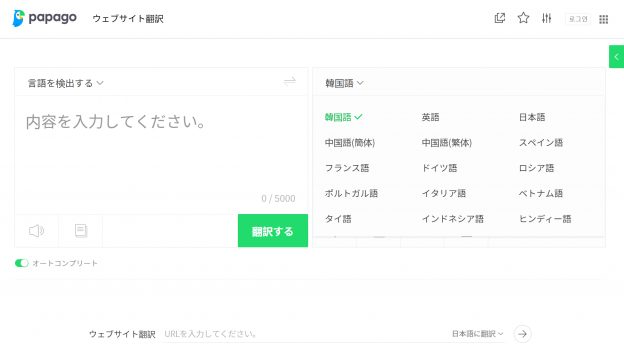
There is no doubt that AI translation (machine translation) has greatly contributed to improving the efficiency of translation tasks. It is especially effective when you want to quickly grasp a large volume of materials or rapidly create draft translations for internal review.
On the other hand, it is also true that there are areas within documents in the Physical AI field that AI translation alone cannot fully handle.
To give a clear example, even the single word "joint" needs to be translated differently depending on the context, such as "joint (anatomical)" , "fitting," or "junction." "Payload" is generally translated as "load capacity," but in robot specifications, "carrying capacity" is more appropriate. Similarly, terms like "end effector," "motion planning," "teach pendant," and "safety-rated" require careful selection of translations according to the target field and the document’s purpose.
Furthermore, in safety warnings and contract documents, it is necessary to accurately reflect the nuances of expression, the scope of conditions, exceptions, and the allocation of responsibility. AI translation can be effectively used as an excellent draft tool, but for highly specialized documents, combining it with human review and correction is indispensable.
Reference Blog: How Accurate Is Translation with Generative AI? Comparing ChatGPT, GNMT, DeepL, ChatGPT, Gemini, and Claude!
7. Recommended Translation Workflow
In translation for the physical AI field, it is recommended not to handle all documents in the same way but to use different translation workflows according to the importance of the document. A uniform approach tends to result in insufficient quality for important documents and excessive handling for internal materials.
First, documents classified as high-risk documents include product manuals, safety warnings, maintenance procedures, contracts, customer-submitted specifications, websites, press releases, and the like. These documents require human translation and expert review.
Next, medium-risk documents include technical reports, PoC materials, meeting documents, proposal drafts, vendor materials, API documentation, and the like. It is appropriate to use AI translation as a draft and have human review for specialized terms and important sections.
Then, low-risk documents include internal memos, summaries of overseas articles, preliminary reading of emails, and review of reference materials. AI translation can be actively utilized in this area. However, if there is a possibility of repurposing for decision-making or external submission, please be sure to recheck the content.
Below, we explain the specific steps of the flow.
7-1. Classify Document Usage and Risks
Before starting the translation, first confirm three points: "Who will read the document?", "For what purpose will it be used?", and "To what extent will errors in translation impact the outcome?" Documents related to safety, specifications, contracts, customer submissions, and public release must be handled with high-quality standards.
7-2. Prepare Glossaries and Style Guides
Product names, part names, function names, control terms, safety terms, software terms, and so on should be organized in advance as a Japanese-English glossary. Additionally, unifying unit notations, symbols, product names, and English notation rules helps prevent quality variations between documents.
7-3. Utilize AI Translation as a Draft
When handling a large volume of documents, using AI translation as a draft can significantly increase work speed. However, it is important to decide in advance the extent to which human review will be conducted based on the aforementioned risk classification.
7-4. Incorporate Reviews by Translators with Expertise
For customer submission documents, product manuals, safety-related documents, contracts, and public materials, incorporating reviews by translators with knowledge of robotics, control, manufacturing, safety standards, and software can significantly enhance quality.
7-5. Secure a Confirmation Route with Technical Personnel
Ambiguous descriptions of specifications, product-specific expressions, numerical conditions, safety precautions, and control logic can be difficult for translators to accurately judge on their own. By incorporating a confirmation route with engineers and technical personnel into the workflow in advance, mistranslations and discrepancies in interpretation can be prevented.
7-6. Accumulate and Utilize Translation Assets
Completed glossaries, bilingual data, past translation deliverables, and style guides become valuable assets that enhance the quality and speed of future translations. For companies with ongoing translation needs, this accumulation also leads to long-term cost savings.
8. Documents for Which Utilizing Human Translation Services Is Effective
While establishing a system to utilize AI translation internally, combining it with external human translation services for highly important documents is the most practical approach to balance quality and efficiency.
The use of human translation services is especially effective for documents such as specifications and proposals for overseas customers, product manuals, maintenance manuals, safety warnings, risk assessments, contracts, NDAs, SOWs, websites, press releases, exhibition materials, sales materials, and technical documents for investors and partners.
In such documents, the quality of translation directly affects the company's credibility, product understanding, the success or failure of business negotiations, and the quality of post-implementation support. When it is difficult to handle these with internal resources alone, utilizing services with proven experience in translating physical AI and technical documents makes it easier to resolve quality-related issues.
Reference blog: Evaluating the Performance of Generative AI Translation in 6 Languages [ChatGPT vs Human Translation Comparison Report]
9. Summary
Translation in the field of Physical AI goes beyond mere language conversion. It serves as the information infrastructure for safely operating robots and AI, the sales infrastructure for accurately conveying the value of technology to overseas customers, and the common language to facilitate smooth international joint development.
AI translation is a powerful tool for improving work efficiency, but for documents related to safety, specifications, contracts, customer submissions, and public disclosure, verification by human experts with specialized knowledge is indispensable.
For English-Japanese and Japanese-English translations related to Physical AI, if there are documents whose quality cannot be fully assured in-house or important materials to be submitted to overseas customers, please consider using specialized human translation services. Accurate and practical translations are a reliable investment that supports product credibility and overseas expansion.
Information on Translation Services from Human Science
Human Science Co., Ltd. is a translation company with over 20,000 translation achievements since its establishment in 1985, mainly in the manufacturing, IT, and medical fields. We also have extensive experience in translations directly related to Physical AI fields such as automobiles, machine tools, control equipment, robots, and FA equipment.
Human Science provides services that cover every phase of translation work.
・Support for AI Translation Implementation: We assist in building the optimal AI translation environment for corporate translation tasks, including our in-house developed tool "MTrans for Office," which allows seamless switching among four translation engines—DeepL, Google, Microsoft, and ChatGPT—with a single click on Office products, as well as the Trados integration plugin "MTrans for Trados."
・Post-Editing (MTPE): We have post-editors who conduct translation reviews for each specialized field. From light editing to full editing, we provide optimal post-editing tailored to quality requirements and budget. We have also obtained certification for the international standard for post-editing, "ISO 18587."
・Human Translation: For highly specialized documents such as manual translations, technical specification translations, and contract translations, translators who are well-versed in the relevant fields handle the work. We have obtained certification for the international standard for translation services, "ISO 17100," ensuring stable quality even for large-scale projects.
・Translation Flow Consulting: We provide comprehensive support to improve the efficiency and quality of your company's entire translation workflow, including the utilization of translation support tools (such as Trados and Phrase TMS), the organization of translation memories and glossaries, and the optimal combination of AI translation and human translation.
If you have concerns such as "I want to introduce AI translation but don't know where to start" or "I want to further improve the quality of important documents," please feel free to contact us.













 Return to the top of the page
 +81 35-321-3111[Tokyo Headquarters]
  Contact Us
 Request for Information