




- Table of Contents
-
- 1. What is a Patent Specification?
- 2. Common Purposes and Implementation Methods for Patent Specification Translation
- 3. Reasons Why Patent Specification Translation is Considered Difficult
- 4. Points to Check for High-Quality Patent Specification Translation
- 5. For Patent Translation, "MTrans for Office"
- 6. Summary
Filing a patent application overseas involves the translation of the patent specification. However, this differs in nature from general translation. Not only must the technical content be conveyed accurately, but the handling of expressions related to the scope of rights greatly affects the quality. Since the way it is translated can influence examination and rights interpretation, not only language skills but also technical understanding and knowledge of patent practice are required.
This article organizes and explains everything from an overview of patent specifications to the reasons why translation is said to be difficult, and points to achieve high-quality translation.
1. What is a Patent Specification?

What is a Patent Specification?
A patent specification is a document that describes the content of an invention and is submitted at the time of a patent application. It clarifies what technical problem the invention solves and the structure or method by which it achieves this. The patent office examines this description to assess novelty, inventive step, and other criteria. The specification is not merely an explanatory document but a legal document that influences the outcome of obtaining rights. In addition to accuracy of content, consistency in terminology and description is required.
Other Patent-Related Documents
In addition to the specification, patent applications also require the claims, abstract, drawings, and other documents. During the examination process, documents such as notices of reasons for refusal, written opinions, and amendments may also be necessary. For overseas applications, these documents also need to be translated, so it is necessary to handle not only the specification alone but also related documents.
2. Common Purposes and Implementation Methods for Patent Specification Translation
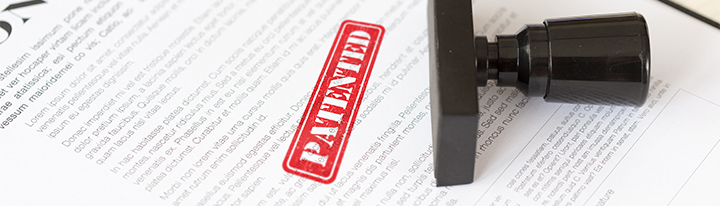
Common Purposes of Patent Specification Translation
The most common purpose of translating patent specifications is for filing patent applications abroad. A typical example is translating application documents prepared in Japanese into English, Chinese, etc., and submitting them to patent offices in various countries and regions. When aiming to obtain rights in overseas markets, translation becomes an indispensable procedure.
Additionally, patent specification translation is also required in situations other than filing, such as acquiring licenses, considering technical partnerships, and preparing reference materials for patent litigation.
How to Implement Patent Specification Translation
Patent specification translation is generally outsourced to translation companies with proven experience in patent translation. Since translating patent documents requires a high level of expertise, it is necessary to have a system capable of handling both the relevant technical field and patent practice.
Additionally, because patent documents often contain unpublished invention information, the security measures of the service provider are an important point to verify. In addition to signing an NDA, it is essential to carefully check data management methods and the working environment.
In recent years, there has been an increase in cases where machine translation and AI translation are used as supplementary tools. However, for documents like patent specifications where accuracy is critical, it is realistic to operate on the premise of expert review and correction.
3. Reasons Why Patent Specification Translation is Considered Difficult
High Level of Expertise
One reason why patent specification translation is difficult is the wide range of technical fields involved. The knowledge required varies by field, such as mechanical, electrical, chemical, pharmaceutical, and IT.
If the content of the invention is not fully understood before translating, errors in terminology selection and sentence interpretation are likely to occur. In patent translation, in addition to language skills, technical understanding of the relevant field is indispensable.
Many abstract expressions and technical terms require advanced translation techniques
Patent specifications sometimes use highly abstract expressions to appropriately secure the scope of rights. In addition, there are many technical terms specific to the technical field and fixed expressions unique to patent documents.
These expressions cannot be translated with the same approach as general documents. Overly free translation may change the meaning or scope of rights, while simple literal translation can be inaccurate. Patent translation requires the skill to express the original intent precisely while maintaining the original meaning.
Risk of Application Rejection Due to Mistranslation or Errors
In patent specification translation, even minor mistranslations or errors in description can have significant impacts. If the relationships between components or the application of conditions are translated incorrectly, it may work against the examination process.
In some cases, corrections or resubmissions may be required, resulting in additional time and costs. Furthermore, since there is a risk that the scope of rights may be interpreted more narrowly than intended, ensuring quality at the translation stage is crucial.
Understanding the format, expressions, and rules of patent documents is necessary
Patent specifications have formats and expression rules that differ from general technical documents. There are specific formats for the order of description and the expressions used in claims and specifications.
Furthermore, these formats and customary expressions may vary depending on the country or region. Therefore, patent translation requires対応 based on the system and practical customs of the filing destination.
Research skills and the ability to comprehend and understand the original text are required
Patent specifications often include new technologies and unique concepts, making it difficult to select appropriate translations using only dictionaries. Therefore, research skills to investigate related technologies, existing patents, and specialized glossaries while choosing expressions are essential.
Additionally, the original text itself is often lengthy and structurally complex. Without accurately interpreting modifying relationships and logical structures, it is impossible to produce an appropriate translation.
4. Points to Check for High-Quality Patent Specification Translation

Request after accurately organizing the original text
To obtain high-quality translations, it is important to organize the original text as much as possible before translation. If inconsistencies in notation, typographical errors, discrepancies with drawings, or ambiguous expressions remain, interpretation during translation can easily become unstable. By confirming the consistency of terminology and the coherence of the content in advance, the accuracy of the translation tends to stabilize.
Criteria for Selecting a Translation Company
When requesting the translation of a patent specification, selecting the right translation company is crucial. The main points to check include the company's track record in patent translation, experience in the relevant technical field, review system, and security measures. It is important not to judge solely based on price or delivery time, but to assess whether the company has a system in place to consistently ensure quality.
Request with ample lead time
In patent specification translation, it often takes time for research and verification. There are cases where confirming the original intent and scrutinizing terminology are necessary, making it difficult to ensure sufficient quality within a short period. Therefore, it is desirable to request the translation with as much lead time as possible. Requests made just before the deadline make it difficult to secure enough time for review and corrections.
5. For Patent Translation, "MTrans for Office"

What is "MTrans for Office"?
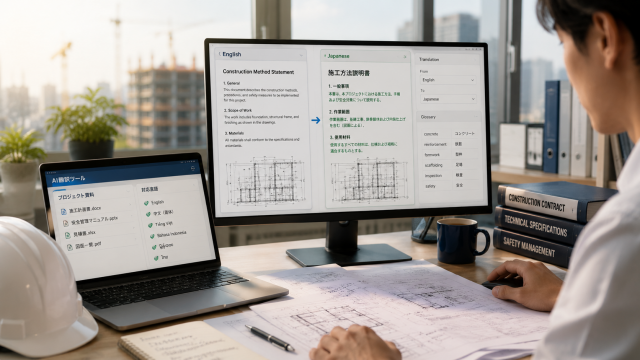
MTrans for Office is a corporate AI translation tool that can translate Office files such as Word, Excel, and PowerPoint as they are. It is characterized by its ease of introduction because it can be operated from the Office environment used daily. It is a tool that can be easily utilized in situations where you want to streamline the initial stages of translation work, such as first translations of patent-related documents and creating drafts for content review.
Why "MTrans for Office" is useful for patent-related documents
MTrans for Office can be used directly from the existing Office environment, minimizing the burden of implementation on site. While utilizing translation engines such as DeepL and ChatGPT (OpenAI), it is also possible to combine company-specific glossaries. This makes it easier to unify specialized terminology and maintain consistency of expressions required in patent specifications, leading to efficiency from draft creation to internal review.
In patent-related work handling highly confidential invention information, the security system is as important as translation accuracy. MTrans for Office is designed for corporate use, so you can consider its introduction with confidence in this regard as well.
We also offer post-editing services if you have concerns about handling it in-house
While you may want to improve efficiency by utilizing AI translation, there can be concerns about using AI translation for important documents. In such cases, combining post-editing—where experts review and correct the draft created by AI translation—can help achieve both efficiency and quality.
At Human Science, in addition to providing MTrans for Office, we also support post-editing services.
6. Summary
In patent specification translation, understanding the technical content, knowledge of the patent system, precision in expression, research skills, and reading comprehension are required. Therefore, to achieve high-quality translation, it is important to prepare the original text properly and select an appropriate translation company or translation system.
On the other hand, in recent years, the use of AI translation has made it easier to improve the efficiency of draft creation and review tasks. The key is to determine which processes should be streamlined by AI and which should be handled by humans.
Human Science supports patent translation work, from providing the secure AI translation environment "MTrans for Office" to offering post-editing services. If you have any difficulties with translating patent-related documents, please feel free to consult us.





















 Return to the top of the page
 +81 35-321-3111[Tokyo Headquarters]
  Contact Us
 Request for Information