




As corporate globalization progresses, the translation of contracts is becoming increasingly important. Contracts are fundamental documents in business activities, and mistranslations carry a high risk of causing major troubles and losses, making it essential to improve the quality of translations. This article explains the main situations where contract translation is necessary, the differences between Japanese and overseas contracts, translation methods, points to note, and services to enhance translation accuracy.
- Table of Contents
-
- 1. Main Types of Contracts That Require Translation
- 1.1 Agency Agreements and Distributor Agreements
- 1.2 Software License Agreements
- 1.3 License Agreements and Usage Permission Agreements
- 1.4 Intellectual Property Rights Agreements
- 1.5 Outsourcing Agreements and Work Contracts
- 1.6 M&A (Mergers and Acquisitions) Related Agreements
- 1.7 Employment Contract
- 1.8 Confidentiality and Non-Disclosure Agreement
- 2. Differences Between Contracts in Japan and Other Countries
- 2.1 Cultural Differences
- 2.2 Formal Differences
- 3. Methods of Translating Contracts
- 3.1 Using Machine Translation Tools In-House
- 3.2 Outsourcing to Translation Companies
- 4. Points to Note When Proceeding with Contract Translation
- 5. Introduction to "MTrans for Office" and Human Science Support Services
- 5.1 About "MTrans for Office"
- 5.2 Post-Editing (MTPE) Service
- 6. Summary
1. Main Types of Contracts That Require Translation

There are actually many types of contracts for which companies require translation. For example, the following types of contracts can be mentioned.
1.1 Agency Agreements and Distributor Agreements
This is a contract concluded with local agents or distributors when selling your company's products or services overseas. It includes core business matters such as sales areas, sales methods, commissions, and the presence or absence of exclusivity rights.
1.2 Software License Agreements
This contract defines the terms and scope of software use, prohibited actions, license fees, and more. It is essential when IT companies and software development firms expand overseas.
1.3 License Agreements and Usage Permission Agreements
This is a contract for allowing other companies to use intellectual property such as patents, trademarks, and copyrights. The scope of use, duration, and methods of royalty payment are specified in detail.
1.4 Intellectual Property Rights Agreements
This contract pertains to the transfer, sharing, or joint development of intellectual property such as patent rights, trademark rights, and copyrights. It is frequently used in situations involving technical partnerships and collaborative research and development.
1.5 Outsourcing Agreements and Work Contracts
This is a contract used when outsourcing part of the work to an external company or individual. The contract clearly specifies the scope of work, deadlines, compensation, and responsibilities.
1.6 M&A (Mergers and Acquisitions) Related Agreements
These are contracts related to corporate mergers, acquisitions, and business transfers. They include a wide range of details such as transaction terms, the transfer of assets and liabilities, and the treatment of employees.
1.7 Employment Contract
This is a contract for employing employees, which stipulates working conditions, salary, benefits, and termination conditions. It is necessary, for example, when hiring locally at overseas offices.
1.8 Confidentiality and Non-Disclosure Agreement
This is a contract concluded when sharing confidential information with business partners or subcontractors. It stipulates the handling of information and the response in case of leakage.
These contracts are all important documents directly related to business activities. The contexts for translation are diverse, and no mistranslation of any contract is permissible. Misunderstandings or differences in interpretation of contract contents can lead to major troubles or losses, thus requiring specialized knowledge and high translation skills. By improving the quality of translation, it is possible to ensure the reliability of the company and the security of international transactions.
2. Differences Between Contracts in Japan and Other Countries

When translating contracts, it is necessary to have a deep understanding of the differences in legal systems and cultures between Japan and other countries (especially Western countries).
2.1 Cultural Differences
Japanese contracts tend to place strong emphasis on the trust relationship between the parties and social customs, often using deliberately ambiguous expressions or abstract phrasing rather than documenting everything clearly. This stems from Japan's unique cultural background, which avoids strong expressions or unilateral provisions out of consideration for the other party's position and to prevent conflict.
On the other hand, in Europe and the United States, it is emphasized to clearly document all contract terms and eliminate ambiguity. This is based on the assumption that "the other party may not keep their promises," known as the doctrine of inherent distrust, and the underlying idea is to prevent future troubles by specifying details thoroughly.
2.2 Formal Differences
Japanese contracts tend to be limited to the minimum necessary content, often omitting matters considered obvious between the parties or clear according to social customs, resulting in generally short and concise documents. In contrast, Western contracts are very lengthy and comprehensive, as they are detailed to cover all possible risks and scenarios.
Another characteristic is the use of concrete and clear expressions to avoid ambiguity and leave no room for interpretation. In this way, when drafting or translating contracts, it is important not only to replace the language but also to fully understand the underlying cultural and risk management differences, and to adjust the content according to the customs and purposes of the other country.
3. Methods of Translating Contracts
There are mainly the following two methods for translating contracts.
3.1 Using Machine Translation Tools In-House
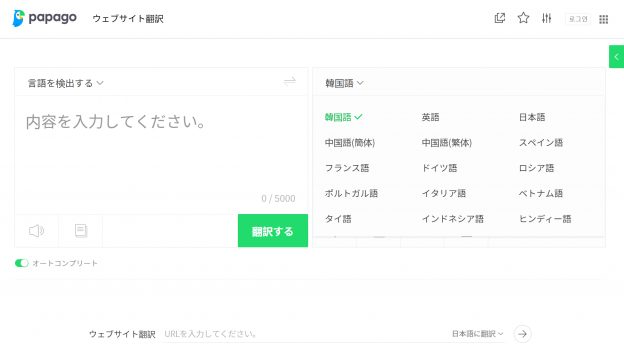
In recent years, high-performance machine translation services such as Google Translate and DeepL have become widely available, making it easy for anyone to carry out translation tasks. The biggest advantages of this method are significantly reducing costs and being able to translate large volumes of documents in a short time. It is especially convenient when used as reference materials or rough drafts within the company.
However, in documents with a high level of specialization and requiring legal accuracy, such as contracts, the limitations of machine translation become apparent. Misinterpretations of technical terms and literal translations that ignore context are likely to occur, which can lead to misunderstandings of the content and legal risks. Additionally, when translation work is completed entirely in-house, final quality checks and legal reviews tend to be insufficient. Therefore, careful handling is required for the translation of important contracts.
3.2 Outsourcing to Translation Companies
Specialized translation companies utilize machine translation tools to improve operational efficiency, but ultimately, professional translators who are well-versed in industry knowledge and legal expertise carefully review the content. This ensures not only a simple language substitution but also a high-quality translation that accurately reflects the unique expressions and legal nuances of contracts.
Many translation companies have a strict verification system involving multiple experts, such as double checks and legal checks, ensuring highly reliable deliverables. However, this method tends to be more costly and have longer turnaround times compared to in-house translation. Nevertheless, when the content of a contract directly relates to inter-company transactions and legal responsibilities, it is safest to request a reliable translation by professionals, even if it incurs some additional cost and time.
4. Points to Note When Proceeding with Contract Translation

This section explains the points to be careful about when translating contracts, item by item.
・Be cautious of mistranslations and accuracy when using machine translation tools
Contracts are important documents with legal effect, requiring precise terminology and expressions. While machine translation tools are convenient, they often fail to accurately capture the nuances of context and specialized terms, leading to mistranslations and unnatural expressions. Especially for strict documents like contracts, even minor mistranslations can cause major problems, so relying solely on machine translation is risky.
・Free tools like Google Translate are not suitable
Free translation tools such as Google Translate are convenient for everyday conversation and simple sentences, but they are not appropriate for highly specialized documents like contracts. Free tools struggle to accurately translate technical terms and legal expressions, and there is also a risk of information leakage from a confidentiality standpoint. For contract translation, a more reliable method should be chosen.
・Be Careful When Selecting a Translation Company
When outsourcing contract translation, selecting the right translation company is extremely important. It is necessary to carefully choose from multiple perspectives, such as whether they have industry expertise, their past performance and reliability, whether they have a quality control system like double-checking in place, and whether they can meet deadlines. If these factors are insufficient, there may be issues with the quality of the translation or the delivery schedule.
・Clarify the Purpose, Background, and Cultural Differences of the Translation
When translating contracts, it is necessary not only to replace words but also to clarify the purpose and background of the translation and consider the cultural and business practice differences of the counterpart country. For example, the same expression may have different legal implications depending on the country, so it is important to fully convey the intent and background of the contract to the translator.
・Possess Expertise in International Trade and Legal Matters
Contract translation requires not only language skills but also knowledge of international trade and the laws of each country. Legal terminology and contract practices vary by country, so without specialized knowledge, mistranslations or inappropriate expressions may occur, increasing legal risks. Translators and translation companies are expected to have expertise in legal affairs and international trade.
5. Introduction to "MTrans for Office" and Human Science Support Services
5.1 About "MTrans for Office"
MTrans for Office is a service that enables high-quality translation with just one click within Microsoft Office (Word, Excel, PowerPoint, Outlook). It is especially ideal for companies that have in-house experts and handle many specialized documents and materials daily, improving operational efficiency. The main features are as follows.
・Direct Translation within Office
No need to move files or copy and paste. You can perform translation tasks directly from the familiar interface, making effective use of experts' time.
・Selectable from Four Translation Engines
You can choose the most suitable engine according to your purpose or specialized field from DeepL, Google, Microsoft, and ChatGPT (OpenAI).
・Pre-registration of Proper Nouns
By pre-registering company names, product names, and technical terms, mistranslations of specialized content are prevented, ensuring accurate translations.
・High Security
You can translate highly confidential documents with confidence, making it ideal for important materials handled by in-house experts.
Easy Translation Software for Office, MTrans for Office
5.2 Post-Editing (MTPE) Service
When translating important documents such as contracts, relying solely on machine translation may leave concerns about accuracy and nuance. In such cases, we recommend using Human Science's "Post-Editing (MTPE) Service".
・Thorough Review and Correction by Professional Translators
The results of machine translation (MT) are carefully checked in detail by professional translators with expertise in contracts, and corrected to accurately reflect the original intent and legal nuances. This minimizes mistranslations, unnatural expressions, and legal risks.
・Speedy and High-Quality Service
Combining the speed of machine translation with quality assurance by experts. We provide high-quality translations with shorter delivery times and lower costs compared to traditional translation. This is especially ideal for large volumes of documents or when quick turnaround is required.
・Reliable Support System for Peace of Mind
We provide meticulous support tailored to your requests and purposes, including terminology standardization and application of style guides. We also respond promptly to any questions or revision requests after translation, ensuring a system you can use with confidence.
6. Summary
The translation of contracts carries the heavy responsibility of influencing a company's credibility and the success or failure of global business. By correctly understanding the characteristics of translation methods and incorporating advanced specialized services as needed, it is possible to drive business forward while minimizing risks. At our company, Human Science, we strongly support your creation of high-quality contracts through the latest translation solutions and the expertise of our professional staff.
At Human Science, we offer the automatic translation software MTrans for Office, which can utilize translation engines from DeepL, Google, Microsoft, and ChatGPT. ChatGPT can be used not only as a translation engine but also for text generation, rewriting, and proofreading depending on the prompts. MTrans for Office is available with a 14-day free trial. Please feel free to contact us.
Features of MTrans for Office
① Unlimited number of translatable files and glossaries with a flat-rate plan
② One-click translation from Office products!
③ Secure API connection
・For customers who want further enhancements, we also offer SSO and IP restrictions
④ Japanese-language support by a Japanese company
・Support for security check sheets is also available
・Payment by bank transfer is available
MTrans for Office is an easy-to-use translation software for Office.


















 Return to the top of the page
 +81 35-321-3111[Tokyo Headquarters]
  Contact Us
 Request for Information