


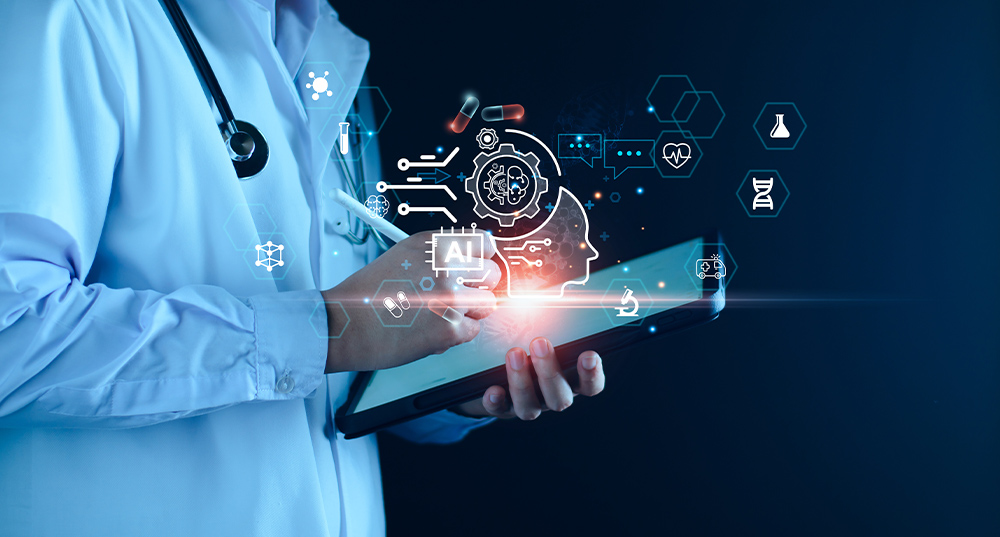
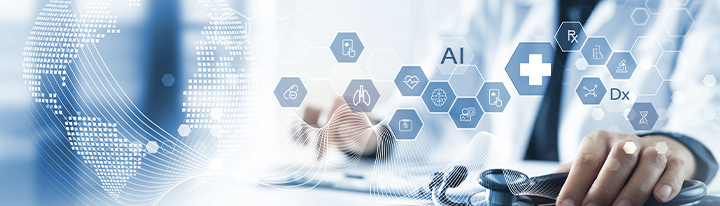
The use of AI and machine translation is steadily expanding even in the field of medical translation, which deals with highly specialized documents such as those in healthcare, pharmaceuticals, and academic research. In areas that have traditionally been considered difficult, advances in AI technology have dramatically improved accuracy and efficiency, making these tools powerful aids for those involved in translation work. This article introduces specific methods for utilizing AI in medical translation and the benefits it offers.
- Table of Contents
-
- 1. Utilization of AI in Medical Translation and Its Background
1-1. Utilization of AI in Medical Translation
1-2. Background of AI Utilization in Medical Translation
- 2. AI Translation (Machine Translation) and AI Utilization in Related Tasks
2-1. Features of "Machine Translation" by AI
2-2. Examples of AI in Translation-Related Tasks
- 3. Benefits of Utilizing AI in Medical Translation
- 4. Leave Medical Translation Using AI to Human Science
- 1. Utilization of AI in Medical Translation and Its Background
1. AI Utilization in Medical Translation and Its Background
1-1. AI Utilization in Medical Translation
AI utilization in translation, not limited to medical fields, can be considered in two ways: "using AI-based machine translation to efficiently translate medical content such as healthcare-related documents and academic papers," and "using AI for supporting tasks such as terminology unification, style checking, translation memory management, quality evaluation, and efficient research of background knowledge."
1-2. Background of AI Utilization in Medical Translation
In the past, translation in the medical field generally took a cautious approach to the introduction of AI and machine translation due to the requirement for advanced specialized knowledge and the high risk directly impacting patient safety and research outcomes, where mistranslations are unacceptable. While our company has maintained a proactive stance toward adopting machine translation and AI, we have emphasized that thorough revision and verification work is essential.
Related Blog
"Can AI Translate Medical Content? Here's an Efficient Method!"
We continue to maintain this stance even today, but due to the remarkable improvements in AI technology's accuracy in understanding specialized terminology and grasping context, it has become increasingly important to actively promote the use of AI in the field of medical translation.
2. AI Translation (Machine Translation) and AI Utilization in Peripheral Tasks
Here, we will once again introduce the basics of AI translation (machine translation) and the use of AI in peripheral tasks in medical translation.
2-1. Characteristics of "Machine Translation" by AI
There are several methods of AI translation, and they have changed significantly with technological advancements. The early "rule-based translation" involved manually setting grammar and vocabulary rules and generating translations according to those rules. Next came "statistical-based translation," which analyzes large amounts of translation data and selects the most probable translation, enabling more natural translations. Currently, the mainstream method is "Neural Machine Translation (NMT)." This uses neural networks modeled after the human brain's functioning, allowing it to understand context and meaning more deeply and generate natural sentences.
Below, we introduce a blog written by our company's AI experts. Please be sure to give it a read.
What is AI Translation (Machine Translation)? An Explanation of the Mechanics, Benefits, and Usage!
How Machine Translation Works - Literal Translation, Free Translation, and Neural Translation?
2-2. Examples of Translation-Related Tasks Using AI
● Also Applicable to Translation-Related Tasks
AI can be utilized not only for generating translated text but also for various tasks throughout the entire translation process.
For example, it can improve quality and efficiency in processes that are time-consuming and prone to human error, such as terminology unification, style checking, proofreading to detect typos and misspellings, and quality evaluation using machine learning.
With such AI support, translators and translation reviewers can focus on more advanced linguistic judgments, which is expected to improve overall quality and productivity.
Our company is also advancing the development and utilization of in-house text and translation proofreading tools based on LLMs, and individual departments and personnel are exploring daily use in their tasks.
Researching background knowledge, which is indispensable in highly specialized fields such as medical content translation, has also benefited from recent advances in AI.
Although the risk of hallucinations still exists and caution against misinformation is essential, conversational AIs like ChatGPT have become capable of providing quite accurate answers to specialized questions about diseases and medications.
Recently, AI-generated summaries are increasingly displayed at the top of Google search results, making it easier to obtain the necessary information without having to check each individual site.
3. Benefits of Utilizing AI in Medical Translation

In this way, by effectively implementing AI, it is possible to greatly contribute to improving the quality and efficiency of medical translation.
Using AI translation as a draft translation can reduce costs, and since AI quickly generates analysis and translation of the original text, it also leads to shorter delivery times.
Furthermore, by devising prompts for AI and developing and utilizing LLM-based proofreading tools, consistent expressions can be achieved throughout the entire translation.
It goes without saying that the involvement of human expert translators is still necessary in various situations, but the major advantage of utilizing AI is the ability to optimize the balance of speed, cost, and quality.
4. Leave Medical Translation Using AI to Human Science
Human Science, known for its efficiency in translation work using translation support tools, also has extensive experience in translations utilizing machine translation and AI.
We also offer human translation services and post-editing services.
Going forward, Human Science will continue to leverage translation support (CAT) tools such as Trados and automatic translation tools to improve translation efficiency and quality, contributing to the further development of our clients.
Related Pages














 Return to the top of the page
 +81 35-321-3111[Tokyo Headquarters]
  Contact Us
 Request for Information