


 Text Annotation
 Audio Annotation
 Image & Video Annotation
 Generative AI, LLM, RAG Data Structuring
 AI Model Development
 In-House Support
 For the medical industry
 For the automotive industry
 For the IT industry
 For the manufacturing industry


- Table of Contents
-
- 1. Common Concerns When Outsourcing Annotation (Points Often Overlooked When Choosing an Outsourcing Vendor)
- 2. Why There Are Limitations with "Domestic Only" or "Offshore Only"
- 3. What Is the "Hybrid Process" That Achieves QCD Optimization
- 4. The Key to Successfully Implementing a Hybrid Process is the "Management System"
- 5. Points to Check When Selecting a Vendor
- 6. Summary
- 7. Human Science Teacher Data Creation, LLM RAG Data Structuring Outsourcing Service
1. Common Concerns When Outsourcing Annotation (Points Often Overlooked When Choosing an Outsourcing Vendor)

In AI development projects, except for exceptional cases requiring high security or specialized knowledge, it has become common to outsource annotation work to annotation service vendors. However, in reality, there are quite a few challenges with annotation service vendors, such as "unstable quality," "costs not matching expectations," and "inability to meet the expected delivery deadlines."
Also, within a limited budget, cost often becomes the top priority, leading to a tendency to compare from a two-sided perspective: whether to choose a vendor that mainly operates domestically or an offshore vendor. However, in reality, it is not easy to satisfy QCD (Quality, Cost, Delivery) with just one or the other.
This time, rather than simply choosing either a domestic or offshore vendor, we would like to explain the benefits of hybrid utilization of both locations and how to select vendors who build work processes using a hybrid approach across both sites.
[Related Blogs]
>Recommended Outsourcing Services for Annotation Efficiency! Key Points for Company Comparison?
>How to Outsource Annotation Work? 7 Tips
2. Why There Are Limitations with "Domestic Only" or "Offshore Only"

Although these are not all, the strengths of domestic work sites are generally said to include "smooth communication and mutual understanding in Japanese," "accurate understanding of requirements," "ease of management and quality control," and "flexible response to specification changes." On the other hand, weaknesses and challenges are said to include "higher costs compared to offshore," and "difficulty in securing a large number of resources and increasing staff in a short period."
On the other hand, the strengths of offshore include superior scalability such as "lower costs compared to domestic" and "ability to process large volumes of data," while the weaknesses and challenges generally cited are "difficulty in communication and conveying requirements" due to different languages being used, and "significant variability in quality."
As can be seen from this, in today's environment where reducing development costs is required, it is difficult to meet the demanded QCD by relying on only one side. To achieve these demands, it is necessary to consider the domestic and offshore locations as one, understand their respective characteristics, strengths, and weaknesses, and build an overall process to optimize QCD. This can be said to be one solution.
【Related Blogs】
>What Are Annotation Costs? Could They Actually Be High? A Vendor Who Knows the Inside Story Shares the Real Tips for Outsourcing Annotation
>【Spin-off】Does Repeated Checking Improve Annotation Quality?
3. What Is the "Hybrid Process" That Achieves QCD Optimization

Annotation requires different skills, abilities, and characteristics depending on the task. Also, it is not necessary to complete all work either domestically or offshore. By implementing a process that leverages the strengths and characteristics of each, as mentioned earlier, the likelihood of gaining the following benefits increases.
・Costs can be reduced while maintaining quality.
・Leads to shorter delivery times even for large-scale projects.
・Can flexibly respond to customer requests such as requirement changes.
A common pattern seen in hybrid processes is to perform the work offshore, while conducting checks and serving as the point of contact with customers domestically. Our company has also followed this pattern until recently, and it is a typical example that effectively mixes the high quality of domestic work with the cost advantages of offshore. However, this alone does not mean the hybrid process has been fully considered. Regardless of the annotation project, it is necessary not to decide the process uniformly but to design the process by assessing the characteristics of both locations based on factors such as the content and difficulty of the annotation work, edge cases, and the frequency of communication to share how to handle them, and then allocate the most suitable tasks to each site accordingly.
For example, even within a single annotation process, relatively simple but time-consuming tasks can be assigned to offshore locations, while tasks that are difficult without an understanding of Japanese culture and require complex communication can be handled at the domestic site. This division and sharing of multiple tasks within one annotation process is also a form of the hybrid process.
However, on the other hand, because the process is broken down into work units, the overall process tends to become complicated, so annotation service vendors need an appropriate management system to establish a hybrid process.
【Related Blogs】
>What Are Annotation Costs? Could They Actually Be High? A Vendor Who Knows the Inside Story Shares the Real Tips for Outsourcing Annotation
>【Spin-off】Does Repeated Checking Improve Annotation Quality?
4. The Key to Successfully Implementing a Hybrid Process is the "Management System"

Even if an annotation service vendor has both domestic and offshore bases and can design a flexible hybrid process, as mentioned earlier, breaking down the process and dividing the work tends to complicate the overall process. Therefore, it goes without saying that a mature management system and management capabilities capable of realizing this are required. This includes not only unifying quality standards across teams, preparing, updating, managing, and sharing guidelines in both the local native language and Japanese, but also optimizing various management items throughout the annotation process such as communication and escalation rules. These must function closely and effectively, rather than simply having the domestic team and offshore bases follow instructions.
[Related Blogs & Related Pages]
>[Spin-off] Talent Management to Ensure Annotation Quality and Productivity
>[Spin-off] Management of Annotation Work in Human Sciences
5. Points to Check When Selecting a Vendor

So, how should you select a vendor that can realize such an optimal hybrid process? This is not an exhaustive list, but the following are some representative points.
Track record of operations both domestically and offshore
There is nothing that surpasses actual experience. It goes without saying that there will always be challenges and issues that only become apparent after actual operation. Understanding the characteristics and culture of the other party, and then finding the optimal solution through repeated trial and error and improvements, along with the know-how gained there, is extremely important.
Points for Differentiating Offshore and Domestic Use
As mentioned earlier, a uniform process design such as "offshore for tasks, domestic for checks" cannot achieve the optimal solution for QCD. It is important that the criteria for allocating tasks between domestic and offshore based on security requirements, task difficulty, exceptions and edge cases, the difficulty and frequency of communication involved, project scale, and so on, are at least verbalized and shared within the vendor. Hybrid operations inevitably tend to complicate the process. Therefore, for small-scale projects, not only may cost advantages not be realized, but costs may actually increase, so caution is necessary.
Quality Management Process and Management System
Since hybrid processes tend to become complicated, designing the quality management process is crucial. It is not only about whether checks are performed at each site, but also about optimizing costs and labor both domestically and offshore overall. This requires designing which site is responsible for each individual quality assurance check item, and establishing a system capable of properly managing these aspects.
Sharing and Management System of Know-how and Information
In projects, it is important that information such as how to handle edge cases and exceptions not covered in the specifications, work instructions, and communication of specification changes are shared seamlessly between the PM and workers, regardless of whether they are on-site or domestic, and that the communicated matters are thoroughly enforced. Also, as mentioned repeatedly, it is extremely important that the know-how gained through the operation of the offshore-domestic hybrid process is shared within the organization. If the person in charge changes and the process design, management capabilities, and consequently the level of QCD change, it is difficult to say that the vendor is one with whom you can have a long-term relationship, such as for ongoing projects.
【Related Blogs】
>【Spin-off】How to Deal with Edge Cases Not Covered by Specifications
>【Spin-off】Good Teacher Data Starts with Good Teacher Training: Communication Needed on Site
>【Spin-off】The Surprising Difficulty of Annotation: Tips for Selecting Annotation Outsourcing Service Providers Based on Difficulty
6. Summary
As mentioned so far, since offshore and domestic each have their own strengths and weaknesses, it is important not to think of outsourcing annotation service vendors as a simple choice between "domestic or offshore" by placing too much emphasis on price and cost.
Hybrid operation by vendors can be an effective means to optimize QCD; however, for this to succeed, it is crucial to entrust tasks not merely to be executed but to vendors who possess process design capabilities along with a solid management system and structure. While ideally all aspects of QCD would be satisfied as requested, in reality, this is often not the case, making it necessary to prioritize. Therefore, it is essential to understand which points within QCD the client values most, to propose and design processes that meet those needs, and to select vendors who adopt a client-centered approach without a doubt.
Related Blogs
>[Spin-off] Invisible Value Beyond Price That Cannot Be Measured by Cheapness Alone
>[Spin-off] Management of Human Science's Annotation Work
7. Human Science Teacher Data Creation, LLM RAG Data Structuring Outsourcing Service
Over 48 million pieces of training data created
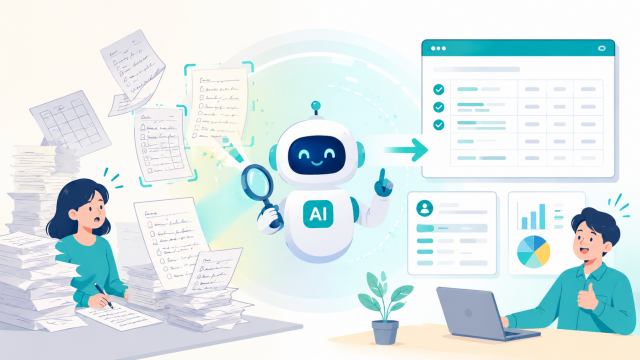
At Human Science, we are involved in AI model development projects across various industries, starting with natural language processing and extending to medical support, automotive, IT, manufacturing, and construction, just to name a few. Through direct business with many companies, including GAFAM, we have provided over 48 million pieces of high-quality training data. No matter the industry, our team of 150 annotators is prepared to accommodate various types of annotation, data labeling, and data structuring, from small-scale projects to big long-term projects.
Resource management without crowdsourcing
At Human Science, we do not use crowdsourcing. Instead, projects are handled by personnel who are contracted with us directly. Based on a solid understanding of each member's practical experience and their evaluations from previous projects, we form teams that can deliver maximum performance.
Generative AI LLM Dataset Creation and Structuring, Also Supporting "Manual Creation and Maintenance Optimized for AI"
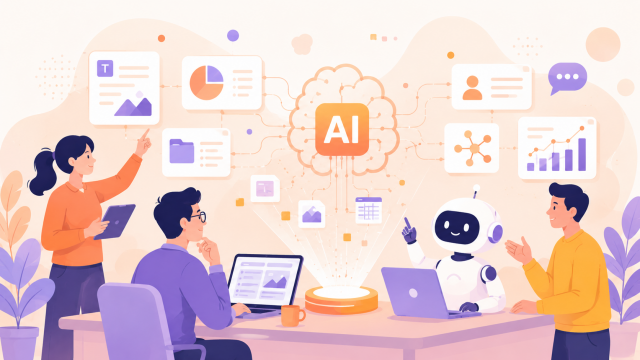
We support not only labeling for data organization and training data creation for identification-based AI, but also the structuring of document data for generative AI and LLM RAG construction. Since our founding, manual production has been our main business and service, and we now also provide support for "organizing business knowledge and manualization toward future generative AI and RAG introduction and utilization." We offer optimal solutions leveraging our unique expertise deeply familiar with the structure of various documents.
Secure room available on-site
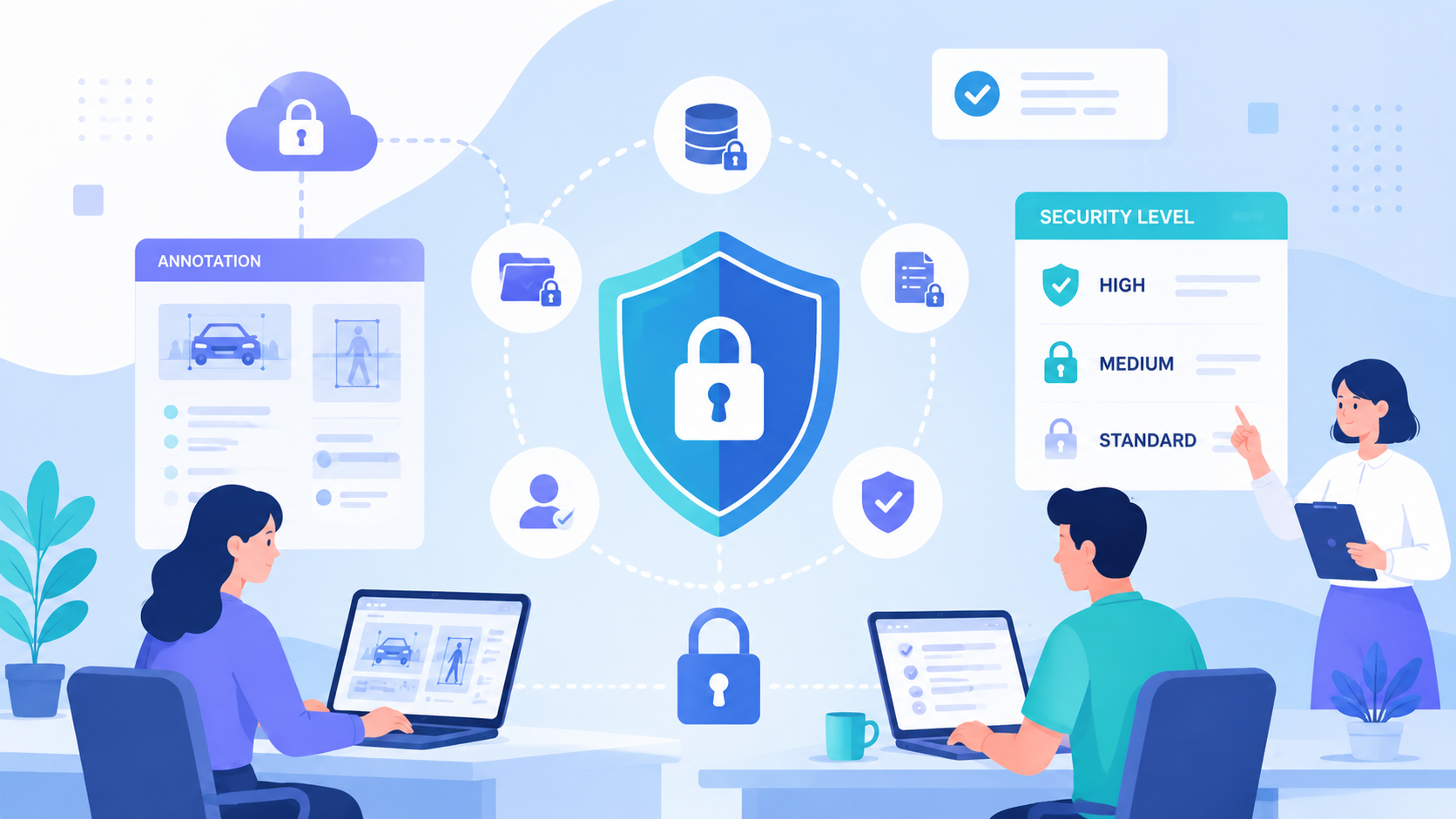
Within our Shinjuku office at Human Science, we have secure rooms that meet ISMS standards. Therefore, we can guarantee security, even for projects that include highly confidential data. We consider the preservation of confidentiality to be extremely important for all projects. When working remotely as well, our information security management system has received high praise from clients, because not only do we implement hardware measures, we continuously provide security training to our personnel.
In-house Support
We also provide personnel dispatch services for annotation-experienced staff and project managers who match our clients' tasks and situations. It is also possible to organize teams stationed at the client's site. Additionally, we support the training of your workers and project managers, selection of tools tailored to your situation, automation, work methods, and the construction of optimal processes to improve quality and productivity. We assist with any issues related to annotation and data labeling that our clients may face.





















































































 Return to the top of the page
 +81 35-321-3111[Tokyo Headquarters]
  Contact Us
 Request for Information
 TOP
TOP SITE MENU