




In the modern age, so many of the goods and services that we utilize day to day are not physical but rather digital, or at least have some digital component like a control app, downloadable upgrades, or an online instruction manual. The appeal of global market expansion without the full hassle of foreign logistics is an appealing business venture, but to realize your greatest success, localization to match the market is an absolute must.
This article will explain the importance of software localization, how to go about it, and what tools and resources are available to help you overcome the hurdles you may encounter. Thanks to over 40 years of experience in the business of electronic manual creation and another 30 in localization services for various digital formats, e-learning, and more, Human Science is well-equipped to guide you through the topic of localized software development.
- Contents
-
- 1. Why Is Software Localization Necessary?
- 2. The Software Localization Process
- 2-1. Determine the target and scope.
- 2-2. Prepare the code for internationalization.
- 2-3. Perform translation and localization.
- 2-4. Run testing and quality checks.
- 2-5. Release the localized software and update as needed.
- 3. What Content to Localize
- 4. Tools, Services, and Localization Support
- 5. Tackling Localization Challenges
- 5-1. How do I ensure that the translation is good quality?
- 5-2. How do we keep up with frequent updates?
- 5-3. How do we balance costs and resources?
- 5-4. Are localization tools and services secure?
- 6. Summary
1. Why Is Software Localization Necessary?
Recent surveys suggest that less than half of the global population has fluency in more than one language, but even for those who are bi- or multi-lingual, many people express a preference for goods and services available in their mother tongue. Therefore, in order to appeal to the largest potential user base, localization is critical to operating in the global market and multicultural societies.
But what makes software localization so special, as opposed to general translation? While translation transforms text from one language to another, localization takes it a step further by adapting the software to the cultural standards and expectations of the society where the product will be sold. This may require not only changing the meaning or spelling of certain words and phrases, but maybe adding additional information, restructuring the layout, changing the iconography, and so on. The goal is to make the software feel familiar and easy-to-use for those in the target region. This comfort and accessibility can have a significant impact on the user experience (UX) and thereby influence the user’s willingness to interact with your product and even recommend it to others.
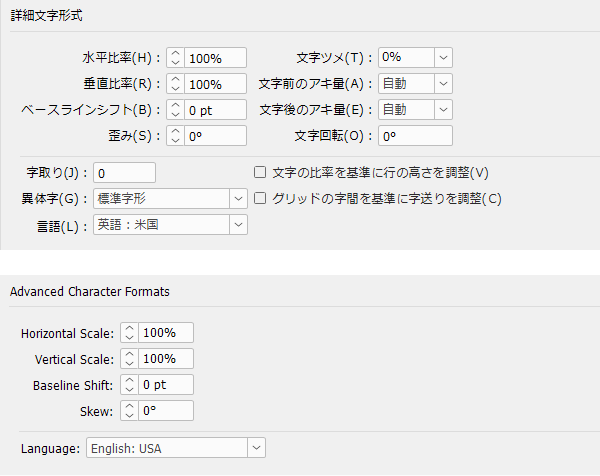
To give an easy example of how localization can make such a huge difference, think about how the length of words and phrases can change drastically when translated into other languages, with Asian languages trending much shorter and Germanic languages much longer than their English counterparts. If the exact same screen layout is used for every version of your digital release and the text is translated without further care, overflowing text or inconsistent spacing can utterly break the visuals, creating an ugly mess that gives the user the impression that the development team was either careless or utterly uncaring in their rollout of the product. This becomes especially true when swapping between languages that are left- and right-aligned, like Arabic and Persian. The intuitive flow of information across the page that you designed for your original release may become broken or nonsensical when serving as the template for another culture’s writing system, especially if it’s at odds with that region’s aesthetic norms.
2. The Software Localization Process
When possible, the plans and potential for global expansion and localization should be considered in the earliest stages of your software development and shape the way that your software is written and designed. Localization is more than a single task; it requires a strategy, preparation, research, and testing to execute properly.
2-1. Step 1. Determine the target and scope.
Once you’re ready to branch out and expand the number of languages that you support, the first step is select your target market and determine how much of your software and other digital resources require localization. Depending on the local laws and customs, some content may need to be added, adapted, or removed to remain applicable. Think about not only the front-facing text, but also the back-end code, files, and folders—especially if local administrators will be managing installations and updates—as well as the words or icons that may be embedded in image files.
2-2. Step 2. Prepare the code for internationalization.
The next step is preparation and making sure that your code is developed with the right functions and flexibility needed to execute properly in different languages. Preparing internationalized objects includes things like two-byte character support for Asian languages and alternative formats of numbers, dates, currency, and so on.
Note that the code itself will be much easier for localizers to handle if the text to appear is linked from separate resource files, rather than embedded in the source code. While translatable text extraction may be possible with certain tools, the risk of translation errors is much higher when the text is hardcoded. Because different languages have endless variation in things like word order and text alignment, there are cases where the rigidity of hardcoded text can lead to a jumbled mess of gibberish when the translated text replaces the original in the code.
2-3. Step 3. Perform translation and localization.
A successful localization requires more than just the text to be translated. Your localization service provider (LSP) needs proper context to ensure the accuracy and appropriateness of the text they deliver. Work with them to procure the right information and resources to fulfill your order, such as target demographics, function descriptions, and even screenshots or access to a build of the software when possible. Some words and syntax have multiple interpretations, and context is necessary to make sure that the proper meaning and intention is conveyed.
Tips for ensuring good quality while balancing the time and costs will be explained in greater detail below, but make sure to discuss your quality standards and the necessary reference materials with the LSP before placing your order.
2-4. Step 4. Run testing and quality checks.
Before implementation, be sure to conduct sufficient testing and quality assurance. In addition to testing the general appearance and operation of the software—ensuring that all of the localized text fits within the allotted space at a legible size, that no content was skipped, and that all of the links and functions still work as intended—make sure that testers native to the target region also have a chance to critique the localization in context and confirm not only whether each foreign language version is appropriate in meaning, but also in tone and aesthetics, appealing to the general expectations of the target audience.
2-5. Step 5. Release the localized software and update as needed.
Finally, when all the localization, testing, and revisions are complete, release your localized software to the public and observe its operation and in the actual market, as well as users’ reactions to new language versions.
Ideally, if all your planning and implementation have been sufficiently thorough, your product will be well received. Nevertheless, be prepared for the inevitable need for updates and maintenance. Whether or not the localized versions experience unique issues that need to be addressed, plans should be made so that whenever the base software undergoes updates and bug fixes, the localized versions can reflect these changes, too, in a quick and timely manner.
3. What Content to Localize
When localizing software for international release, don’t forget about the situational text and peripheral documents as well. Here is a helpful list of content that may require localization for a smooth and comprehensive release.
・UI and UX elements
・Error messages and notifications
・Manuals and help documents
・Marketing materials (landing page, videos, etc.)
4. Tools, Services, and Other Localization Support
When pursuing translation and localization for software, there are a number of tools and services out there, ready to support you. These resources can be broadly categorized as translation assistance tools, automatic translation tools, and localization vendors.
Translation assistance tools
Applications such as computer assisted translation (CAT) tools and translation management systems (TMS) offer incredible support for the process of human translation, as well as some automatic translation integration services. Popular tools include Trados, Phrase TMS, and MemoQ. CAT tools can be set up to include bilingual glossaries specific to your project and directories of past translations called “translation memories.” They also include quality assurance tools that check for specific spelling, grammar, and accuracy errors that editors may miss.
Translation management systems support the assignment of translation jobs and management of the target files and other resources. Using such systems can often streamline the scheduling, distribution, and delivery of translation work. For a more in-depth look at the features and benefits of these systems, be sure to check out the blog posts below.
>What Is Trados? The Features and Benefits of Using Trados for Translation
>What Is a Translation Management System (TMS)?
Automatic translation tools
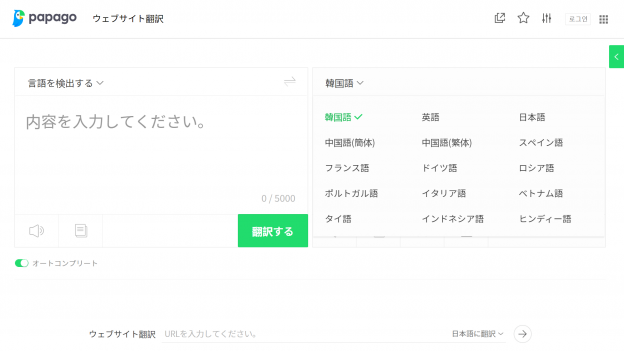
Machine translation engines and other automatic translation tools have seen rapid growth in terms of both technological development and professional use in the software industry, especially since the release of generative AI. Since the adoption of neural networks into machine learning and then large language model AI systems, the results of machine translation are more natural-sounding than ever. And while the accuracy and stylistic consistency of the generated text may require some oversight by a skilled human editor, these tools can quickly create a translated base upon which your localization can be built.
Human Science has done extensive research and comparative analyses on the foremost machine translation systems, regarding their accuracy, security, features, and so on. You can read more with the following resources.
Blogs:
>How Accurate Are DeepL Translations? Comparison with Google and Microsoft for Business Emails
>How Accurate Are Medical Translations by DeepL? Comparison with Google, Microsoft, and Amazon
>Is ChatGPT a Good Translator? Thorough Verification at Each Stage of Translation
Localization vendors
There is a long list of translation vendors on the market, but not all of will be willing or able to support the full requirements of localization as detailed above. When you’re seeking localization support for a software project from an outsource company, make sure to verify the company’s willingness to consult on localization-related changes. Additionally, in order to ensure the highest quality, confirm that their staff includes translators with the right work experience who are native to the target region.
5. Tackling Localization Challenges
Various circumstances can make pursuing localization for your software a challenging prospect. Quality, time, money, scale, and security are all factors that must be properly balanced to optimize the results of localization for your business. The following are some of the most common challenges expressed by those seeking localization and how you can address each issue.
5-1. How do I ensure that the translation is good quality?
If your company does not have dedicated localization staff that specializes in translating for the target regions of your global push, one of the best ways to ensure high quality translation and localization is to outsource to an experienced language service provider (LSP). Human Science and other well-established translation companies will have a roster of language specialists from various countries and professional backgrounds, so they can pair your project with a translator most suitable for the work.
They should also have a standard workflow that incorporates translation review and quality assurance checks as part of the process. Furthermore, they have the resources to utilize the various translation assistance technologies and quality assurance tools described above.
One more crucial factor when it comes to translation quality is the quality of the source material. An LSP can help not only with translation, but with the pre-editing process, to ensure that your data is translation-ready in style and format.
5-2. Our software/content is frequently updated. How do we keep up with localization?
Thanks to more recent technologies, rapid translation with high volume and quick turnover is more accessible than ever before. In particular, the utilization of translation memory and cloud-based translation management tools can help.
Translation memories are bilingual databases that preserve past translations for quick and easy reference. That way, when features and specifications are updated, phrases that are similar or identical to past language can be reused, rather than being translated from scratch. The utilization of translation memories thereby improves both the efficiency and cost of translating updates.
In conjunction with this, modern translation management systems (TMS), which aid the distribution of translation assignments and management of resources, now often come with cloud-based management options that can allow multiple translators to access the same data and reference materials—such as the aforementioned translation memories—simultaneously. This enables multiple people to be assigned to the same project without compromising the style or cohesiveness of the overall software. This means that when you contract with a language service provider for ongoing updates, the translation of new or edited content can be picked up and handled right away by whichever translator is immediately available.
Also worth mentioning are the recent developments in neural machine translation and generative AI. A number of companies offer an automatic translation solution for handling digital updates. Such services have the benefit of near-immediate reflection of new updates in whatever languages the translation engine or generative service is designed to handle, though they lack the level of accuracy and stylistic control that human oversight provides. And so, post-editing by a skilled human translator should be conducted when the accuracy and natural quality of the translation are prioritized.
5-3. The localization budget is limited. How do we balance costs and resources?
A lot of the tools and resources that make the localization of frequent updates feasible are the same as those that lower costs. Translation memories and automatic translation services in particular can do a lot to bring down the cost of localization.
When translation memories are maintained, repetitious source content can be reflected in the translation automatically, and even content that is similar but not identical can be handled at a discount, according to the percentage of matching text. This is especially useful for lowering the cost of large software projects and content that undergoes regular updates.
Automatic translation solutions using machine translation services can also bring down the overall cost of localization, not to mention increase the speed of production. Rather than requiring days and weeks for a human translator to manually rewrite your software into the target language, an automatic translation engine can create a baseline translation in mere minutes or hours. From that point, it’s up to you how much your want to invest in brushing up the content with the help of a human editor—whether a quick accuracy check will suffice or if a deep and comprehensive style edit is within your means.
For a free consultation on the translation service options that Human Science provides and what options are a good fit for your project, contact us here.
5-4. Are localization tools and services secure?
Confidentiality is a pressing concern for companies that handle sensitive or personally identifiable information. Ensuring that the tools and services used to handle translation do not share that content with any third party, either intentionally or unintentionally, is an absolute priority in many cases. Machine translation engines like DeepL or Google Translate, and generative AI systems like OpenAI and Copilot often demonstrate different levels of security when utilizing the free or paid versions. For a more detailed explanation of the risks and security measures associated with these services at the free and paid levels, be sure to check out the blog posts below.
>Confidentiality with DeepL Translations. Is It Secure?
>Is Confidentiality Maintained with ChatGPT, Copilot, Gemini, and Claude? Beware of Information Leakage Risks Even for Translation Purposes!
Translation management systems, meanwhile, can actually reduce the risk of information leaks by storing translation data on a secure cloud server with access restrictions, instead of requiring information exchanges through email and other less-secure means.
6. Summary
Localization of software is more than just translation of the text, but extends to adapting of the phrases, references, and sometimes the layout itself to create a product that feels familiar and relatable to customers in another country to region. Content ranging from UI to notifications, instruction manuals, and advertising can all benefit from localization in the push for international expansion, and various resources can help you achieve such localization goals.
If your own company is ill-equipped, localization vendors like Human Science have both the experience and technology to optimally fulfill your localization needs, in accordance with your budget and requests. A combination of in-house translation experts and industry specialists, translation assistance tools, quality assurance apps, automatic translation engines, and more can ensure that your software is ready and appropriate for whichever markets you hope to enter.
Read more about our localization services in the Localization section of our website, or contact us directly for a free consultation.
Learn more about our software localization and translation services.
UI and Software Translation




















 ページの先頭に戻る

 03-5321-3111[東京本社]
  お問い合わせ
 資料請求
資料請求