




As globalization advances, the occasions to translate contracts with overseas companies continue to increase. By utilizing translation tools, it becomes possible to translate contracts quickly even within the company; however, there are also challenges and risks unique to these tools. Contracts are legally binding documents, and a single mistranslation can lead to serious trouble.
In particular, continuing to use free translation tools for business purposes carries risks in terms of security and quality. Choosing a tool solely because it is "convenient" or "cost-free" can ultimately lead to significant losses.
This article organizes the current challenges of contract translation tools and the risks of continuing to use free translation services, and explains key points for choosing tools without failure. Furthermore, we also introduce the AI translation tool "MTrans for Office," which is suitable for contract translation.
- Table of Contents
-
- 1. Current Issues of Contract Translation Tools
- 1-1. Limitations in Contextual Understanding
- 1-2. Risk of Mistranslation of Technical Terms
- 1-3. There are mistranslations of idioms and cultural expressions
- 1-4. There is a risk of missing translated sections in long texts
- 1-5. There are security-related risks
- 2. Risks of continuing to use the free version of contract translation tools
- 2-1. Risk that the input text is stored and collected by the service provider
- 2-2. Risk of Legal Disputes and Prolonged Litigation Due to Mistranslation
- 2-3. Risk of Increased Correction Workload Due to Format Distortion
- 3. How to Choose a Contract Translation Tool Without Failure
- 3-1. Clarification of Purpose
- 3-2. Thorough Security
- 3-3. Translation Accuracy
- 3-4. Necessity of an Internal Review System
- 3-5. Customizability
- 4. For Contract Translation Tools, "MTrans for Office"
- 4-1. What is "MTrans for Office"?
- 4-2. Reasons Why "MTrans for Office" is Useful for Contract Translation
- 4-3. Support for Post-Editing Services When There Are Concerns About Handling It In-House
- 5. Summary
1. Current Challenges of Contract Translation Tools
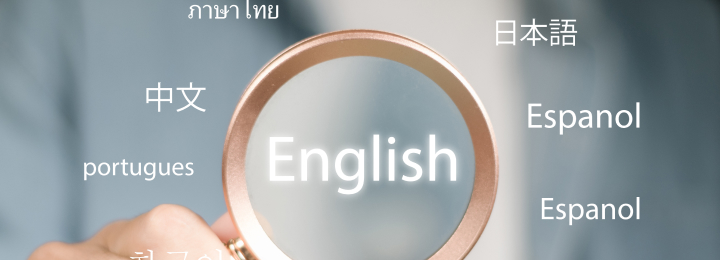
With advances in AI translation technology, more companies are utilizing tools for contract translation. However, current translation tools have several structural issues, and using their output as-is carries risks for documents requiring high accuracy, such as contracts. Here, we outline the main challenges faced by contract translation tools.
1-1. Limitations in Contextual Understanding
Current translation tools primarily process translations on a sentence-by-sentence basis, which presents the challenge of insufficiently grasping the overall context of a document. In contracts, it is common for terms defined in earlier clauses to be referenced in later clauses, and for the interpretation of one clause to affect another.
For example, if at the beginning of a contract it is defined that "‘Deliverables’ in this agreement refers to the following," then every subsequent appearance of "Deliverables" must be translated based on that definition. However, since translation tools process text sentence by sentence, they may fail to accurately reflect such definitions and cross-references that span the entire document.
In addition, contracts frequently use cross-references between clauses such as "notwithstanding the provisions of the preceding paragraph" and "except as provided in Article ○." Translating these expressions requires judgment based on an understanding of the overall structure of the document, but current translation tools do not sufficiently cover this aspect.
1-2. Risk of Mistranslation of Technical Terms
Contracts contain many legal terms that are used with meanings different from those in general contexts. For example, "consideration" generally means "thought" or "care," but in contracts, it refers to the legal concept of "consideration (the price of the contract)." Similarly, "execution" usually does not mean "execution" in the general sense but rather "the signing or conclusion of a contract."
Translation tools tend to select terms based on general usage, which can result in cases where the specific legal meanings are not accurately reflected. Misinterpretation of technical terms carries the risk of fundamentally altering the interpretation of the contract content and may also cause legal disputes.
Furthermore, even for the same legal term, the appropriate translation may vary depending on the type of contract and the relevant field. For example, "liability" can be translated in multiple ways such as "responsibility," "compensatory liability," or "debt" depending on the context, and it is necessary to accurately distinguish these translations while maintaining consistency throughout the entire contract.
1-3. Misinterpretations of Idioms and Cultural Expressions
Contracts use unique idiomatic expressions rooted in the legal systems and commercial customs of each country. Expressions commonly seen in English contracts, such as "time is of the essence" (a clause requiring strict adherence to deadlines) and "best efforts" (an obligation to make the utmost effort), are not mere idioms but concepts with specific legal effects.
Translation tools sometimes literally translate these legal idiomatic expressions based on their general meanings. If "time is of the essence" is translated as "time is the essence," the important legal meaning that a delay in the deadline constitutes grounds for contract termination is completely lost.
Similarly, problems arise when translating expressions unique to Japanese contracts into English. Concepts specific to Japanese law, such as the "principle of good faith and fair dealing," "warranty liability for defects," and "duty of prudent management," require a deep understanding of both legal systems to be accurately conveyed into another language, and current translation tools alone find this difficult to handle.
1-4. There is a risk of missing translated sections in long texts
It is not uncommon for contracts to span dozens of pages. Especially in M&A-related contracts and license agreements, annexes and appendices are attached in addition to the main text, resulting in a huge overall volume. Many translation tools have limits on the number of characters or paragraphs they can process at one time, creating a risk that some clauses or paragraphs may not be translated—resulting in "translation omissions"—when translating lengthy contracts.
The particular danger of untranslated omissions lies in how difficult they are to notice. When visually checking the translated contract, if you only read the translated text, you may not even realize that some parts are missing. If the omitted clauses include important risk management provisions such as exemption clauses or limits on liability for damages, this could lead to significant losses for the company.
1-5. Security Risk Concerns
Contracts contain highly confidential corporate information such as client names, transaction amounts, intellectual property information, and personal data. When using translation tools, it is essential to thoroughly check how the input text data will be handled.
Especially with free translation tools, the input text may be used for service improvement or as training data for AI. If you enter highly confidential contracts without checking the terms of service, there is a risk that information may unintentionally leak outside. There have been reported cases in the past where the contents of confidential documents entered into free translation services were accessible to third parties via search engines.
It is essential to verify in advance whether the tool to be used is appropriate in light of the company's compliance policies and security policies.
2. Risks of Continuing to Use Free Versions of Contract Translation Tools

While free translation tools are easy to use, there are significant risks associated with continuing to use them for contract translation. Focusing solely on cost advantages can ultimately lead to substantial losses for the company. Here, we explain the specific risks of continuing to use free versions of translation tools for contract translation.
2-1. Risk of the entered text being stored and collected by the service provider
Many free translation tools collect and store the text entered by users as data for improving service quality and training AI models. In other words, once the content of a contract is entered, that information may be stored on the service provider's servers and could potentially be accessible to third parties.
Contracts often contain information that should be protected under non-disclosure agreements (NDAs) with business partners. Entering contract details into free tools carries the risk of violating NDAs. Additionally, there is a possibility of breaching regulations such as the Personal Information Protection Law and GDPR, which could result in legal violations and damage the company's credibility.
With paid corporate translation tools, there are services that clearly guarantee not to save input data or use it for learning. When handling confidential documents such as contracts, it is important to choose tools with clear data handling policies.
2-2. Risks of Legal Disputes and Prolonged Litigation Due to Mistranslation
Free translation tools may have sufficient accuracy for translating general documents, but they do not necessarily meet the precision required for legal documents such as contracts. The free versions often limit customization of the translation engine and glossary functions, making mistranslations of legal terms and inconsistencies in terminology more likely to occur.
Mistranslations in contracts can lead to differences in interpretation between the contracting parties and cause legal disputes. For example, if the distinction between mandatory clauses and best-effort clauses is translated improperly, one party may claim that they "have not fulfilled their obligations," while the other may counter that it is "merely a best-effort obligation." Such disputes, if they escalate to litigation, can become prolonged and result in enormous attorney fees and litigation costs.
When comparing the cost invested in translation accuracy with the potential damages caused by mistranslations, it is clear that establishing a highly reliable translation environment is ultimately far more economical.
2-3. Risk of Increased Correction Workload Due to Format Disruption
Contracts are often created and managed as Word files, with unique formatting applied such as clause numbers, indents, tables, headers, and footers. Many free translation tools use a copy-and-paste method for text translation, which causes the original formatting information to be lost after translation.
When returning the translation results to the original Word document, a large amount of formatting correction work occurs, such as misalignment of clause numbers, broken indents, damaged table structures, and changes in page break positions. The accuracy of formatting is also important for contracts, and if clause numbers are misaligned, cross-references will not function properly, compromising the consistency of the document.
The time spent on such formatting corrections can often exceed the time required for the translation itself. By choosing a tool that can translate while maintaining the file format, you can significantly reduce this unnecessary workload.
3. How to Choose a Contract Translation Tool Without Failure

Considering the challenges and risks of contract translation tools, what criteria should be used to choose a tool to avoid failure? Here, we explain five key points to keep in mind when selecting a tool suitable for contract translation.
3-1. Clarification of Purpose
The first important step is to clearly define the purpose of introducing the translation tool. Even within contract translation, the uses vary widely. Whether it is used as a reference translation for internal review, as an official translated document to be submitted to business partners, or as a preliminary translation for screening a large volume of contracts, the required translation accuracy and features differ significantly.
If it is for internal review, some roughness in expression can be tolerated, so a tool that prioritizes speed and cost is appropriate. On the other hand, if the translated document is to be submitted to a business partner, it is necessary to build a workflow that assumes a combination with post-editing (manual corrections) in addition to high translation accuracy. Choosing the right tool according to the purpose affects the overall efficiency and quality of the translation work.
3-2. Thorough Security
Contracts are corporate confidential information itself. When selecting a translation tool, it is essential to prioritize confirming the security policies regarding the handling of input data. Specifically, the minimum requirements include that input texts are not stored on servers, are not used as AI training data, and that communications are encrypted.
For corporate tools, there are those equipped with features that comply with company security policies, such as SSO (Single Sign-On), IP address restrictions, and audit log acquisition. It is important to collaborate with your internal IT and security departments to select tools that meet your company's security standards.
3-3. Translation Accuracy
In contract translation, translation accuracy is the most important factor. When selecting a tool, it is crucial to check not only the general translation accuracy but also the accuracy for legal documents. If a tool offers a free trial, you can evaluate the translation accuracy using actual contracts before deciding to implement it.
Also, if the tool is equipped with multiple translation engines, you can compare the translations from each engine and select the most suitable engine according to the type of contract and language pair. An environment where you can choose the best result from multiple engines makes it easier to improve translation quality than relying on a single engine.
3-4. The Necessity of an Internal Review System
No matter how excellent a translation tool is, it is not recommended to use the contract translation results as-is. Along with implementing the tool, it is essential to establish an internal review system to check and correct the translation results. By incorporating reviews by the legal department or external legal experts into the translation workflow, legal risks caused by mistranslations can be minimized.
If it is difficult to establish an internal review system, another option is to choose a tool vendor that offers post-editing services. In an environment where translation tools and post-editing can be used together, even companies with limited internal resources can achieve high-quality contract translation.
3-5. Customizability
In contract translation, it is important to consistently use your company's unique terms and expressions. If the tool has a glossary registration feature, you can pre-set translations for company names, product names, and legal terms to prevent inconsistencies in translations each time. Additionally, if the tool allows you to specify the document type as "contract," contract-specific terms and expressions will be automatically applied even without preparing a glossary, ensuring a certain level of quality.
4. For Contract Translation Tools, "MTrans for Office"
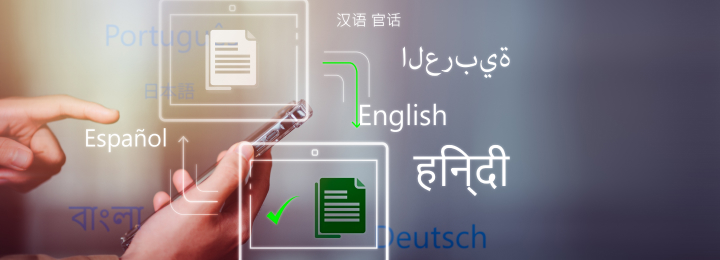
Considering the challenges, risks, and key points for selecting contract translation tools explained so far, it is clear that tools suitable for contract translation require "high translation accuracy," "robust security," and "usability that enhances work efficiency." We introduce "MTrans for Office" as an AI translation tool that meets these requirements.
4-1. What is "MTrans for Office"?
MTrans for Office is an add-in tool that allows you to execute translations with one click on Microsoft Office products such as Word, Excel, PowerPoint, and Outlook. It is a corporate AI translation software provided by Human Science Co., Ltd., and requires no extra steps like launching separate translation software or copying and pasting text. Because you can translate directly within your usual Office environment, it significantly reduces the workload of translation tasks.

4-2. Why "MTrans for Office" is Useful for Contract Translation
Contracts are mostly created in Word, and since MTrans for Office operates as a Word add-in, you can execute translations on the spot while keeping the contract file open. The layout and formatting are preserved after translation, so you won’t need to spend time fixing formatting issues such as misaligned clause numbers or broken indents. This solves the formatting problems often encountered with free tools.
High-accuracy translation is possible thanks to multiple translation engines. MTrans for Office is equipped with four types of translation engines: DeepL, Google, Microsoft, and OpenAI (ChatGPT). You can switch engines with a single click and select the optimal engine according to the type of contract and language pair. It is also possible to compare translations from multiple engines side by side and adopt the most appropriate translation result. Additionally, by utilizing the glossary function, you can unify the translations of legal terms and company-specific terms, ensuring consistency throughout the entire contract.
Robust security is also a crucial point in contract translation. MTrans for Office performs translations via API connection, so the input translation data is neither stored on servers nor used as AI training data. It supports SSO (Single Sign-On) and IP address restrictions, meeting the security requirements demanded for corporate use. This enables the creation of a secure translation environment compliant with corporate security policies, which cannot be achieved with free tools.
4-3. Support Available for Post-Editing Services if You Feel Uneasy Doing It In-House
While you may want to improve efficiency with AI translation, some people may feel uneasy about relying solely on AI for contract translation. In such cases, combining AI-generated draft translations with a post-editing service where experts review and correct the text allows you to achieve both efficiency and quality.
In addition to providing MTrans for Office, Human Science Co., Ltd. also offers post-editing services. We have many post-editors who conduct translation reviews in specialized fields, including legal affairs, and are equipped to correct mistranslations of legal terms and inconsistencies in expressions.
Two types of services, "Light Edit" and "Full Edit," are available depending on the level of revision required for the translation. We can propose the optimal workflow tailored to your budget, schedule, and quality requirements. We have also obtained certification for the international standard for post-editing, "ISO 18587:2017," so you can trust us with quality management.
5. Summary
Contract translation tools greatly contribute to improving the efficiency of translation tasks; however, they also face challenges unique to contract documents, such as limitations in contextual understanding, mistranslation of technical terms, and security risks. In particular, continuing to use free versions of tools for business purposes can lead to serious risks such as information leaks and legal disputes.
When choosing a tool, it is important to comprehensively evaluate five key points: clarifying the purpose, security, translation accuracy, review system, and customizability. Moreover, by combining expert post-editing rather than relying solely on the tool, it is possible to achieve both quality and efficiency in contract translation.
At Human Science, we offer flexible solutions tailored to the needs of contract translation, ranging from providing the secure AI translation environment "MTrans for Office" to post-editing services by professional translators. "MTrans for Office" also offers a 14-day free trial, so if you are looking to streamline your contract translation work, please feel free to contact us.




















 Return to the top of the page
 +81 35-321-3111[Tokyo Headquarters]
  Contact Us
 Request for Information