
Development of AI Agent for Manual Standardization
Experts design manual quality standards tailored to each customer and develop AI-based manual standardization tools.
We also support quality verification in PoC and the design of operational workflows.
Simply introducing AI tools does not always stabilize manual quality or lead to standardization.
Human Science accompanies you from the stage of designing the optimal manual quality standards for your company.











What is the Manual Standardization AI Agent?
The Manual Standardization AI Agent is a system that combines generative AI with uniquely designed quality and notation rules to semi-automatically organize and unify existing manuals.
Based on quality standards such as table of contents proposals and manual writing guidelines, we develop an AI agent that standardizes (rewrites) existing manuals all at once.
At Human Science, we design optimal quality standards tailored to customer needs based on the knowledge accumulated through years of manual production.
Then, through PoC, we verify and adjust whether the manuals rewritten by generative AI meet the required quality standards.
This approach enables efficient manual standardization based on predetermined quality standards, rather than having the AI rewrite arbitrarily.

Do you have these concerns?
-
#01

I want to organize a large number of manuals in a short period and reduce quality variation and dependence on specific individuals
-
#02

As a prerequisite for utilizing generative AI and RAG, we want to improve document quality and unify rules.
-
#03

I want to reduce the time, personnel, and training costs involved in manual standardization work


Your concerns will be solved by Human Science's
Manual Standardization AI Agent Development!

Features of Manual Standardization AI Agent Development
-
 FEATURES 01
Reduce manual standardization workload by approximately 50%
Manual standardization is a high-load task that requires time and experience, including interpreting quality standards, rewriting work, proofreading reviews, and quality adjustments between outsourcing and responsible personnel.
By automating many of these processes with AI agents, a workload reduction of approximately 50% can be expected, mainly in the rewriting process.
*The reduction effect varies depending on the original manual quality, difficulty, and target quality. -
 FEATURES 02
Support from quality standard design to accuracy verification in PoC
The most common cause of failure in utilizing generative AI is starting operations with ambiguous quality standards.
When standards are unclear, variations in generated results and rework increase, often resulting in no efficiency gains.
At Human Science, we support everything from creating standards to developing AI agents and verifying accuracy in PoC, realizing standardization AI that can truly be used on-site.
* AI development is conducted in collaboration with our company partners. -
 FEATURES 03
Support after implementation, including business flow design using AI agents
An important aspect after implementing AI agents is designing operations to sustain results.
We will accompany you through creating a system that allows continuous use of AI agents, including designing and documenting new business flows and the division of roles between humans and AI using AI agents.
We also support the utilization of standardized manuals for RAG.

Use Cases for Manual Standardization AI Agent Development
-
 CASE 01
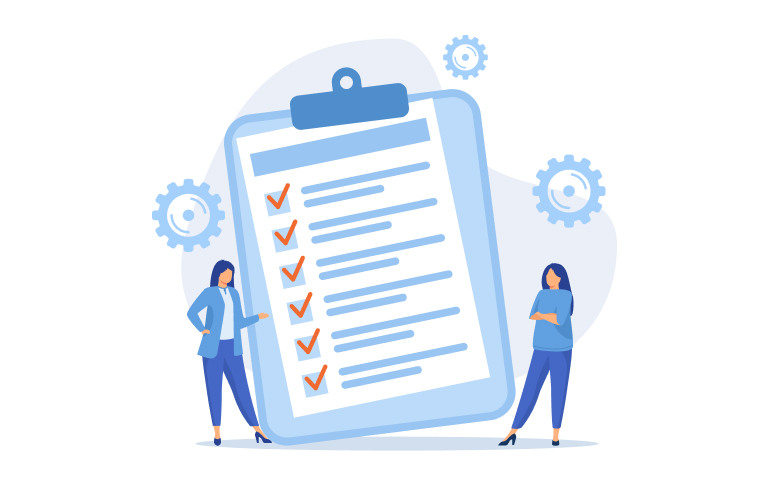
Financial Sector
A RAG chatbot was developed to handle inquiries to the back-office department, and it became necessary to organize the manuals that serve as reference data. Since there was a large volume of manuals to be organized, the manual standardization AI agent was used to efficiently organize them.
-
 CASE 02
Retail Sector
Manuals for store staff have not been utilized much and their quality varies, so improvements are planned. Since the manuals total several thousand pages and need to be organized in a short period, quality standards were designed and an AI agent was utilized to efficiently carry out the organization.
-
 CASE 03
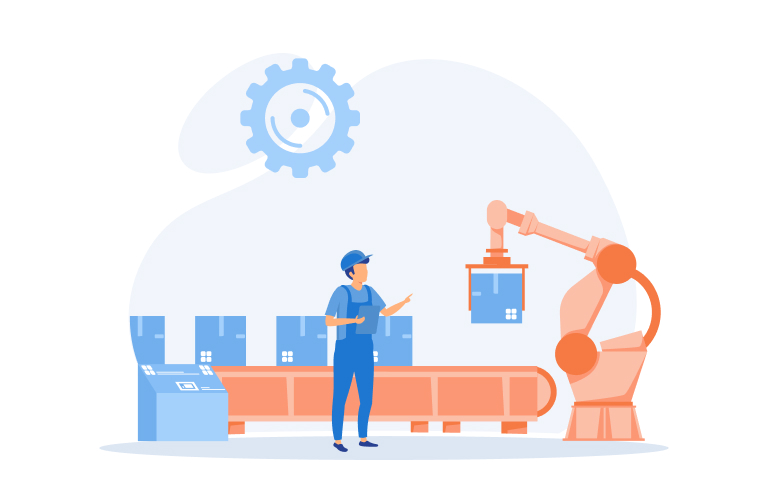
Manufacturing industry
Regarding the large volume of internal manuals, there are quality defects and inconsistencies caused by different authors, making standardization necessary. Therefore, a workflow was introduced where the AI agent rewrites based on quality standards and humans make adjustments, achieving efficient improvement of manual quality.

Process Until Project Start
-
Contact Us
Please contact us via the inquiry form.
It is also possible to conclude an NDA in advance. -
Initial Hearing
The assigned consultant will hear about your company's concerns and issues.
-
Detailed Hearing
The assigned consultant will hear the detailed requirements. An AI developer will also attend if necessary.
-
Proposals
Based on the hearing details, we will present the solutions we offer and the estimated costs.
-
Contract
If you agree to the presented contents, we will conclude the contract.
-
Project Start
We will hold a kickoff meeting and start the project.






FAQ
-
Q1
Can we also request support for tool development?
A.After hearing your requirements, we will introduce you to our partner companies capable of tool development.
Even in that case, we will continue to assist you in the processes of accuracy verification and rule design.
-
Q2
How long does it take and how much does it cost?
A.The duration varies depending on your requirements, the volume of manuals, and the content of quality standards, but the typical schedule from designing quality standards to PoC (accuracy verification) is about 3 to 4 months.
After hearing your detailed requirements, we will present the optimal progress plan and estimate. -
Q3
Is there operational support after the AI agent is introduced?
A.Yes. We can also assist with consultations on post-implementation effectiveness verification, as well as the design and documentation of new business workflows.